Darao Pothikbor
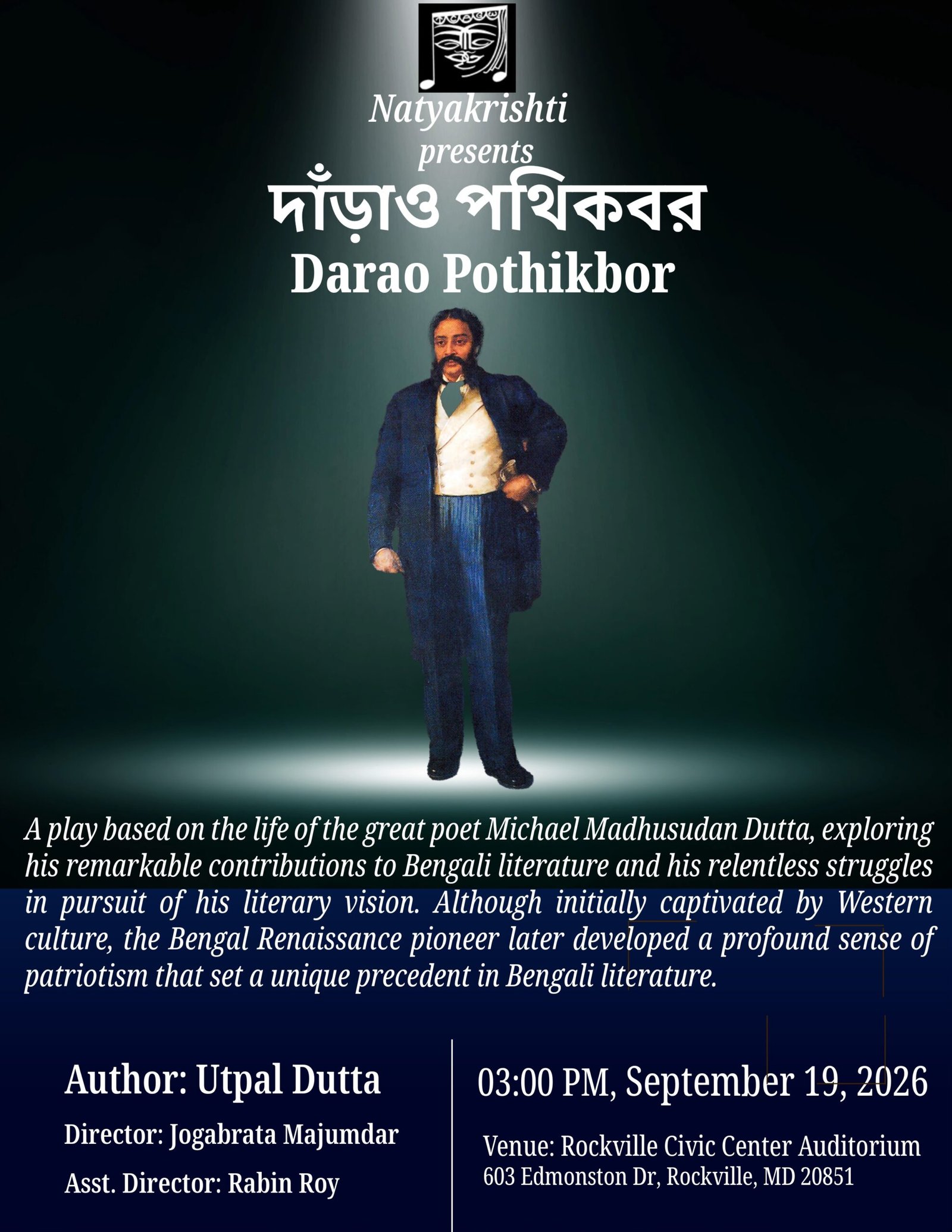
A biography of a great poet of our land, Michael Madhusudan Dutta, and his contribution to Bengali literature
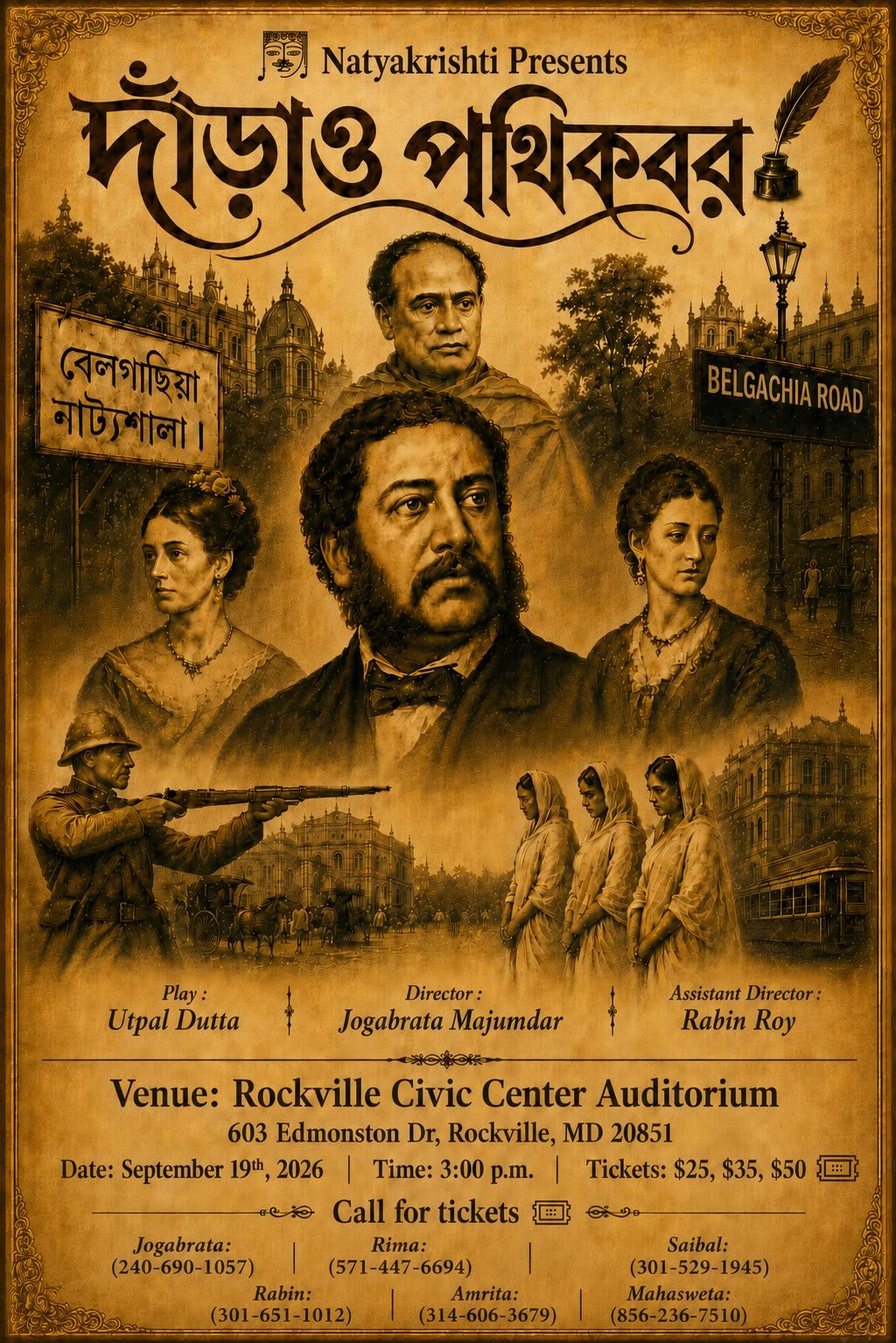
Rockville Civic Center, MD
September 19, 2026
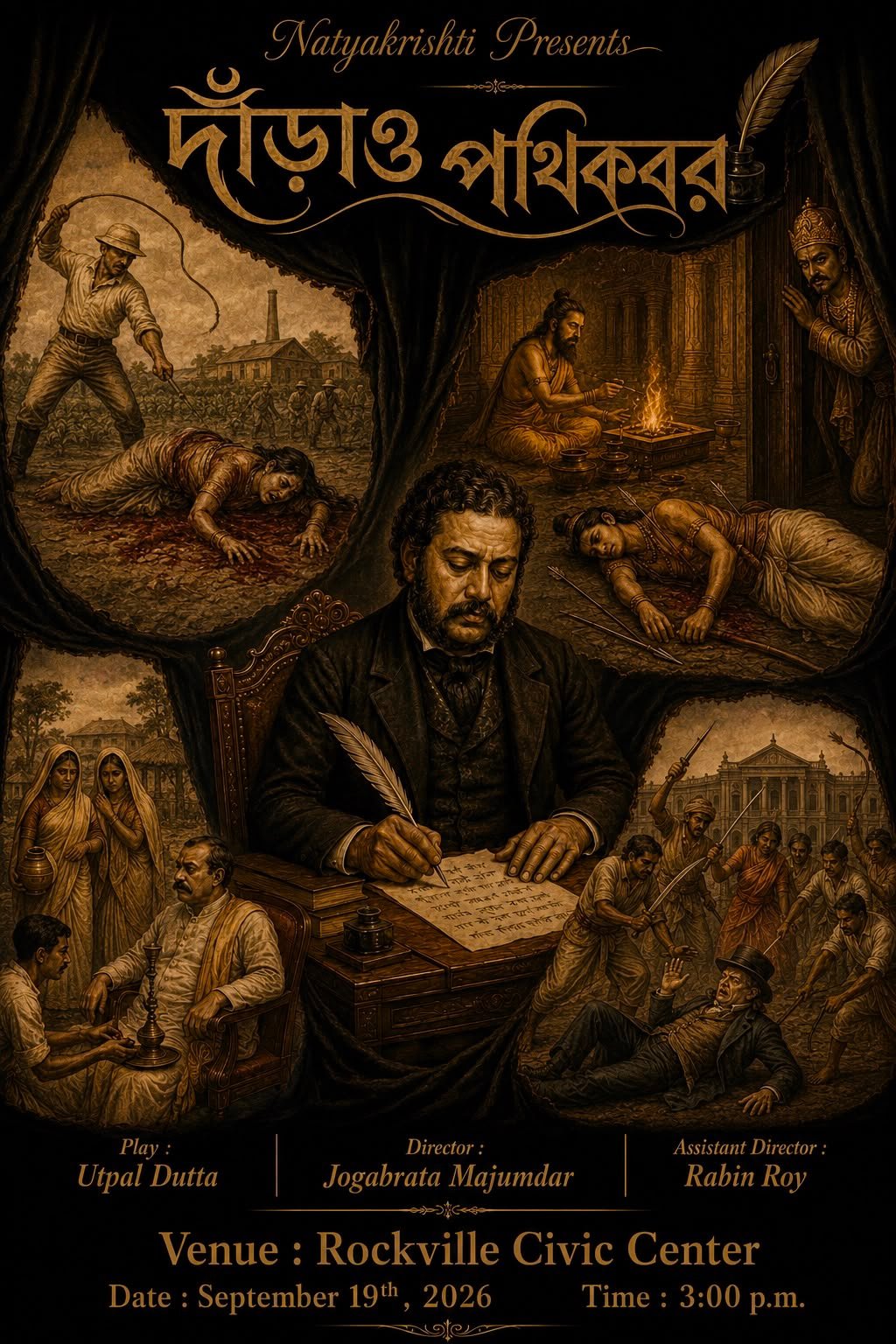
Darao Pothikbor is an evocative biographical drama written by legendary Utpal Dutta that chronicles the tumultuous, brilliant, and tragic life of Michael Madhusudan Dutta, the revolutionary nineteenth-century poet who forever transformed Bengali literature. Driven by an intense passion for Western literary forms and a desire for global recognition, the play explores his dramatic journey from his roots in Bengal to the heart of Europe, his defiant rejection of societal norms, and his ultimate, bittersweet return to his mother tongue. Through a rich tapestry of poignant dialogue, powerful stagecraft, and a deeply moving background score, this production captures the raw emotional conflicts, personal sacrifices, and enduring legacy of a visionary genius who dared to redefine the boundaries of art and expression.
What the audience felt about the drama
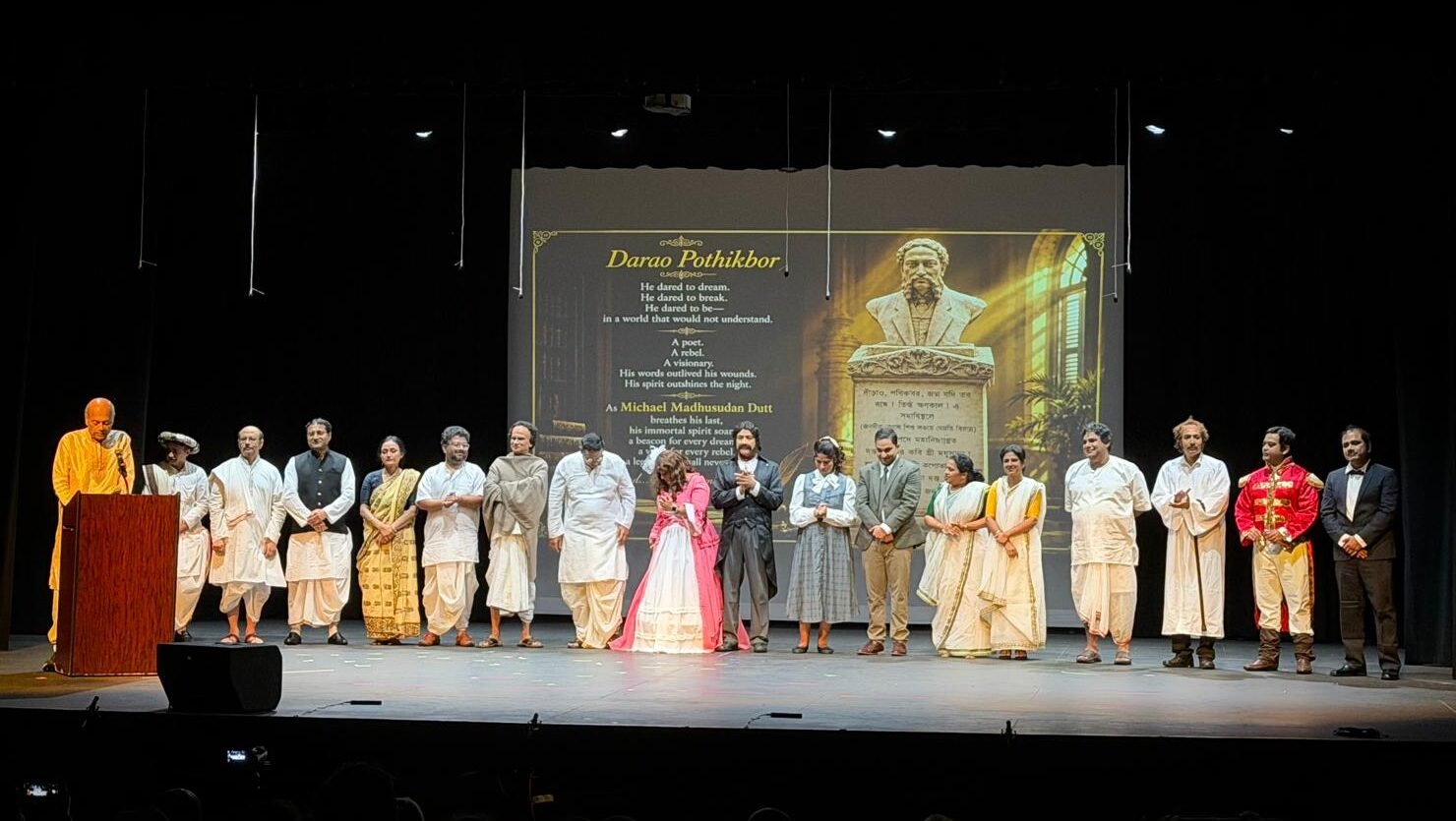
On the 202nd birth anniversary of the legendary Bengali sonneteer Michael Madhusudan Dutta, a leading figure of Bengal’s literary Renaissance, Natya-Krishti (NK) staged its adaptation of Darao Pathikbar, a play by Utpal Dutta. The title recalls the opening line of the epitaph written by the poet himself: “Stop, noble traveller, if you were born in Bengal.”
Read MoreLike many others in the auditorium, I watched this production in 1984. Utpal Dutta was at his best commanding with Shobha Sen as Henrietta White (2nd wife) and Chitra Sen as Rebecca McTavish (1st wife). Dutta’s drama was more personal and psychological portrayal of Madhusudan through his interactions with Henrietta and Rebecca in the backdrop of political environment and bourgeois hypocrisy based on intense dialogues and acting and not much on songs.
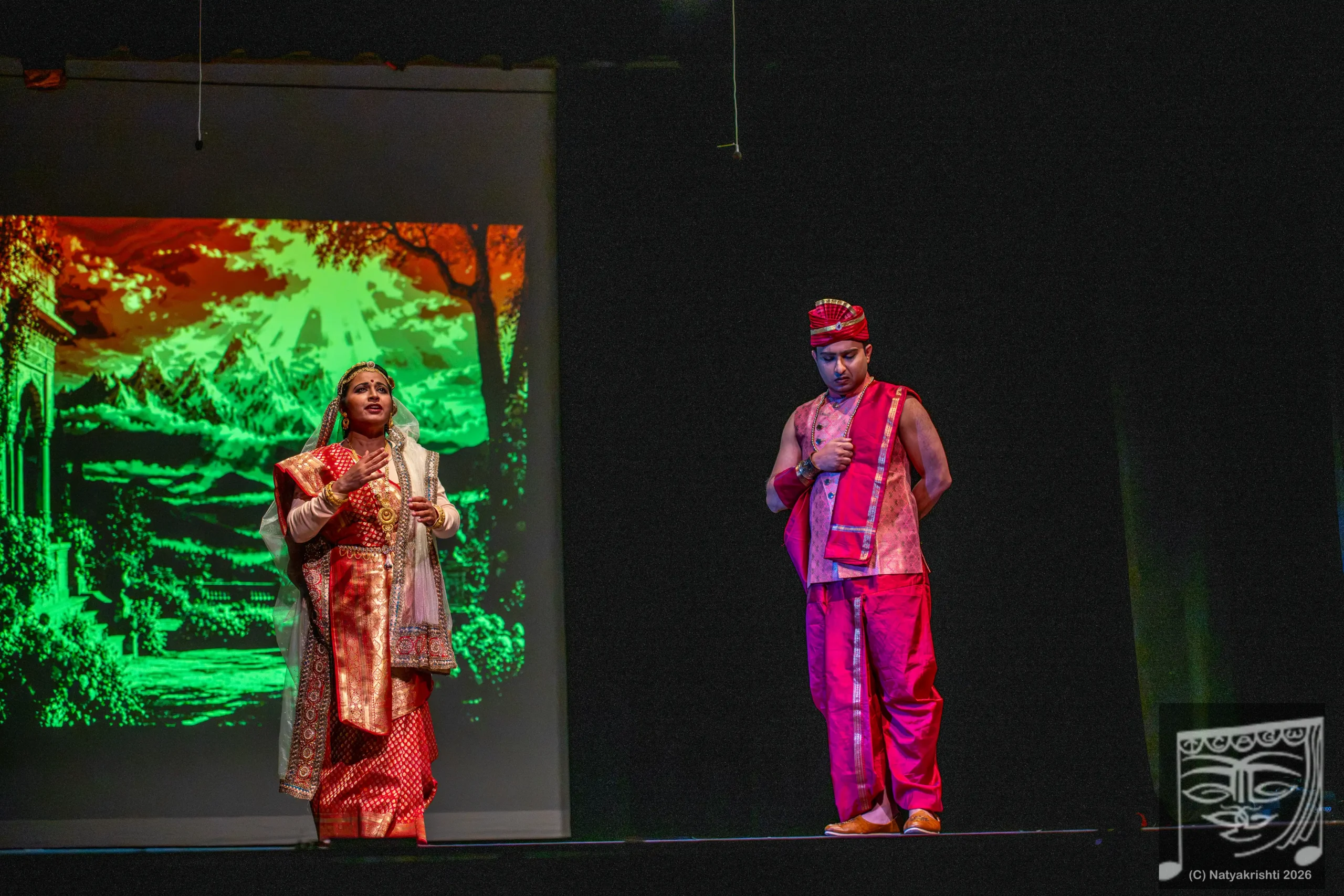
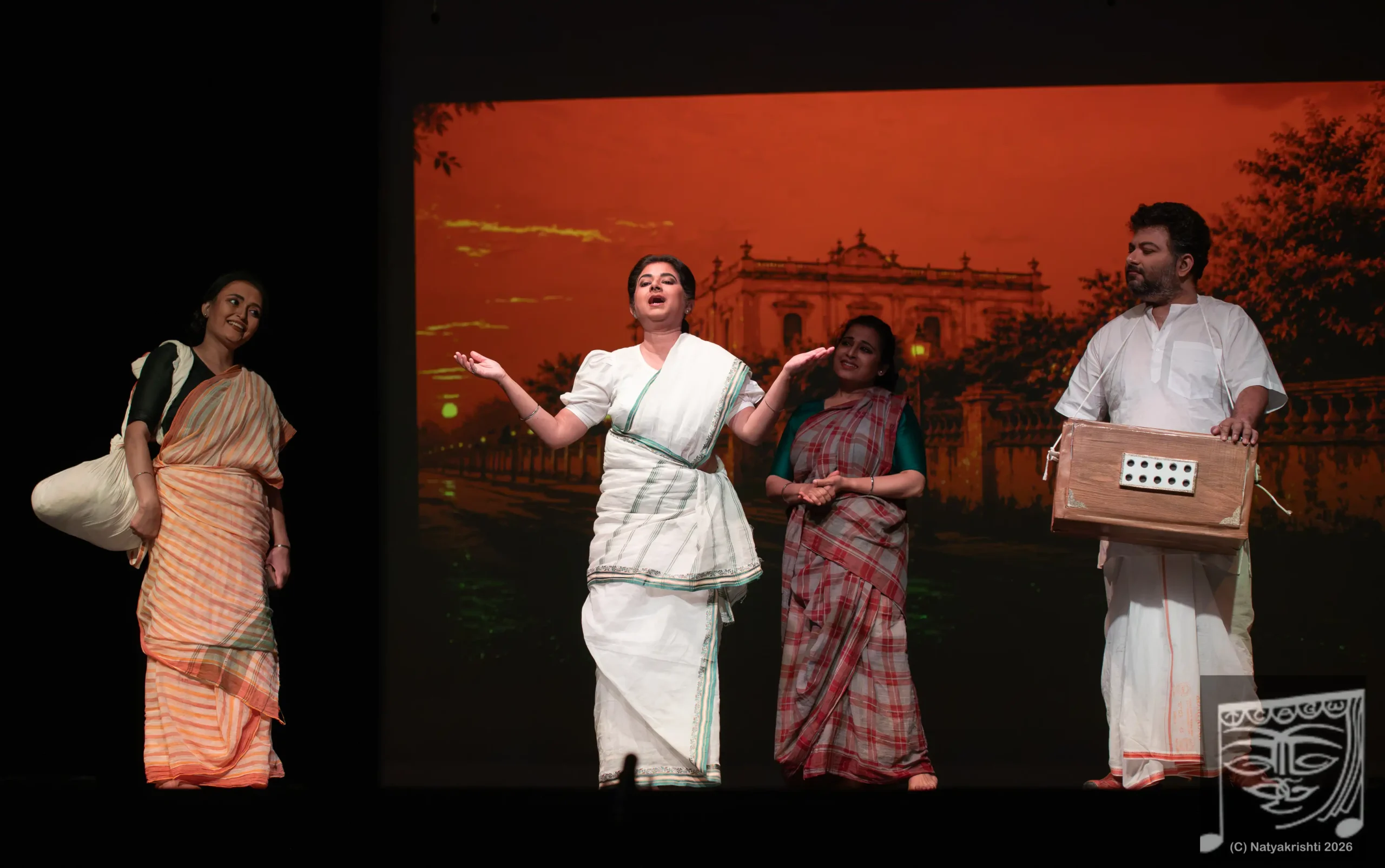
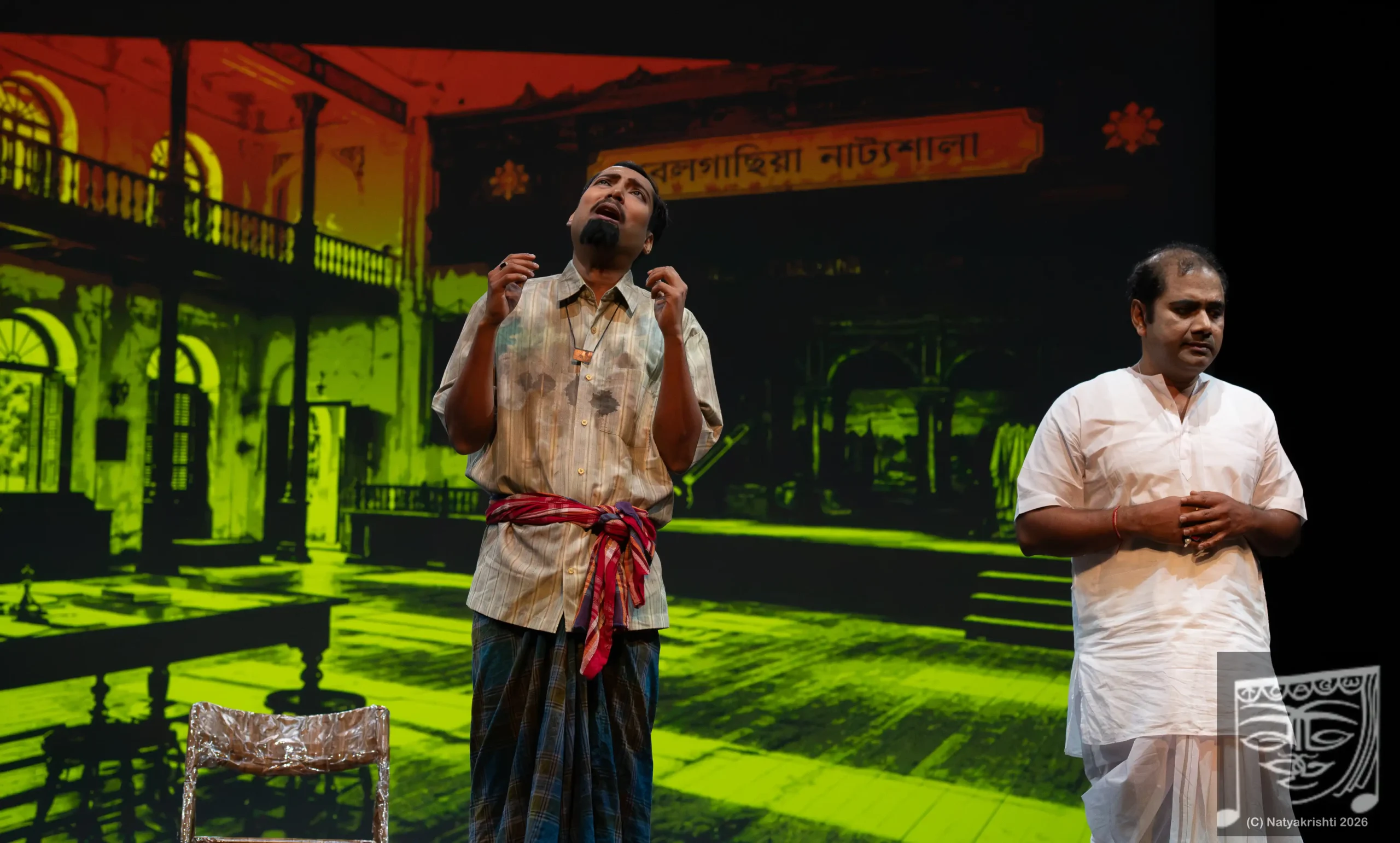
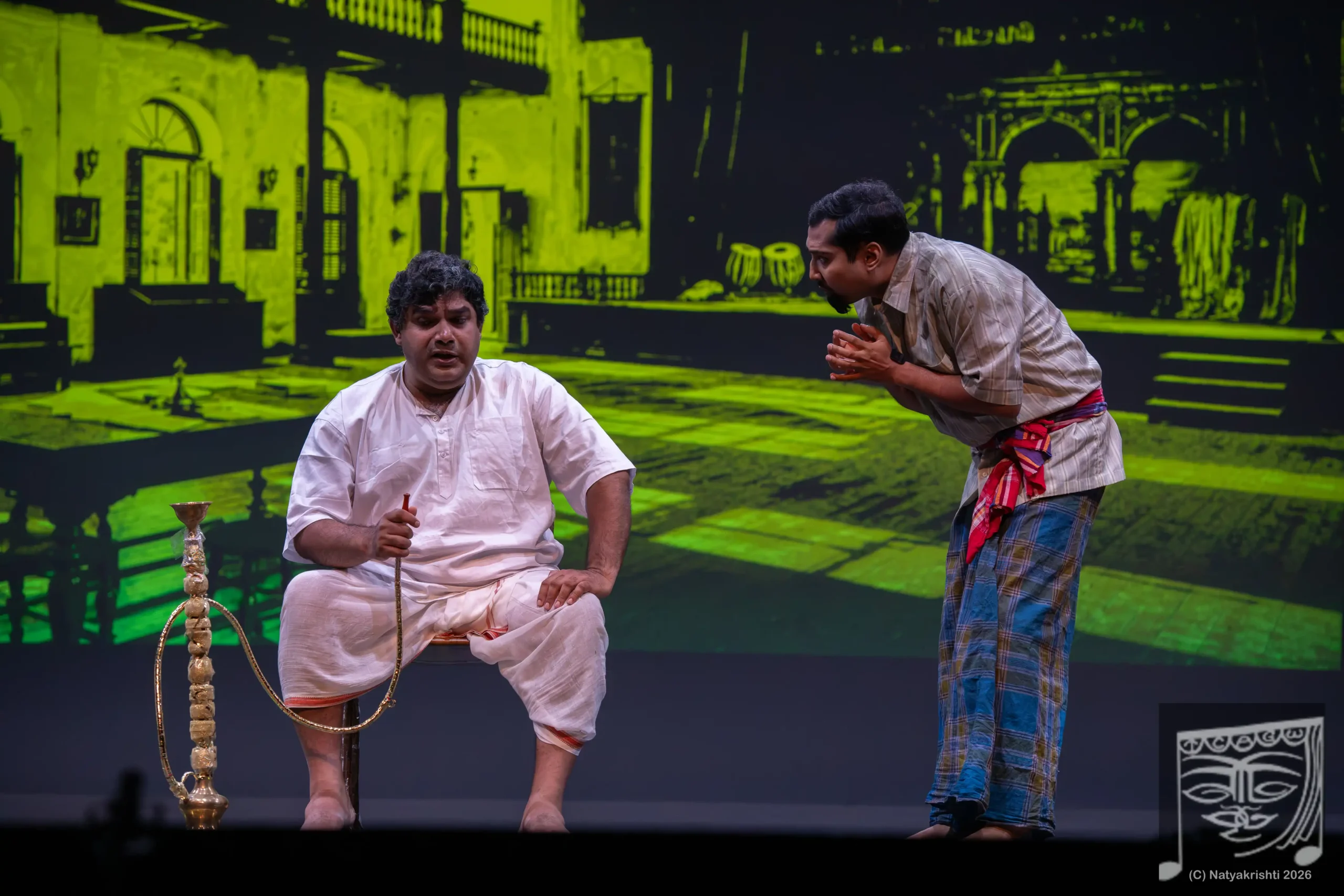
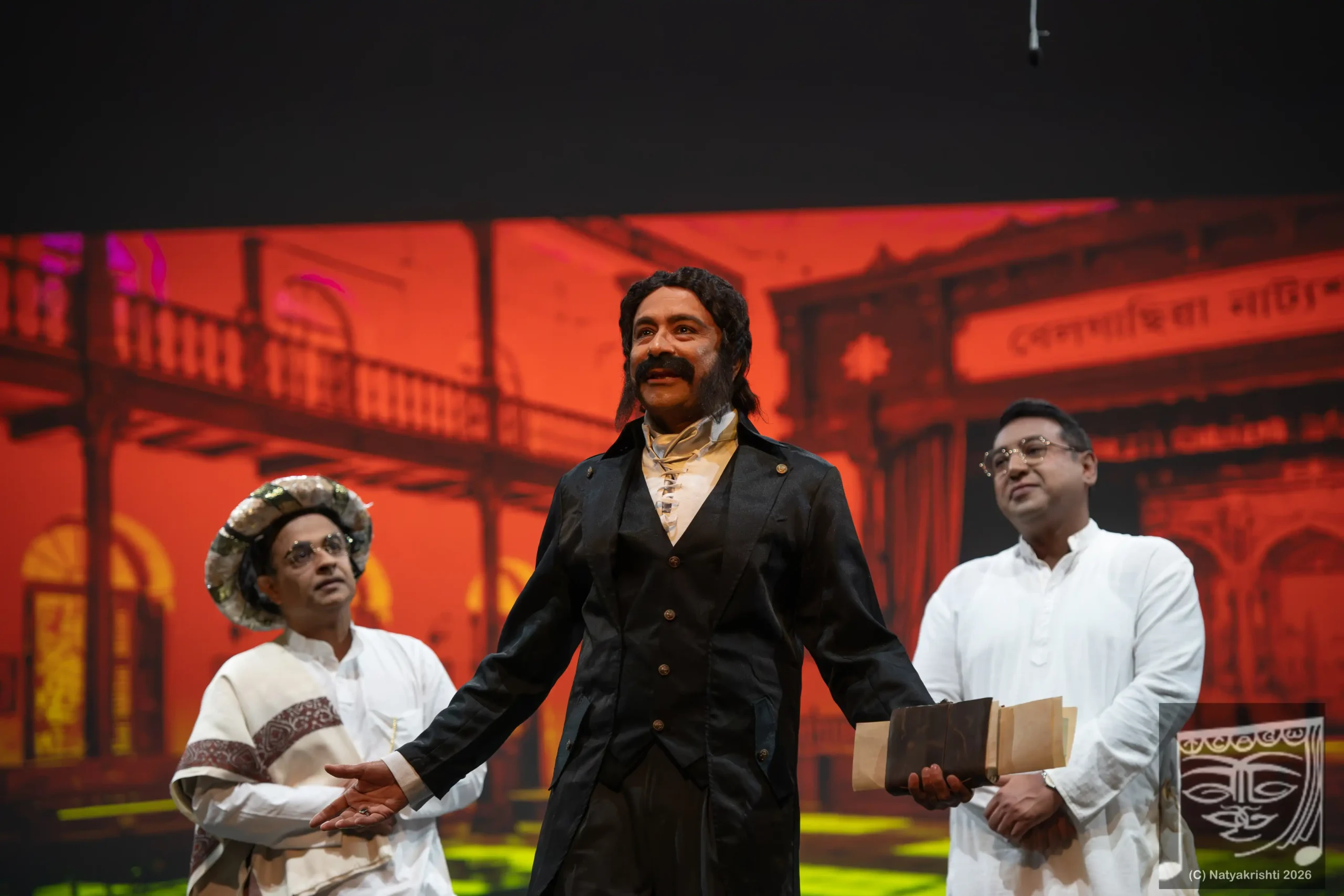
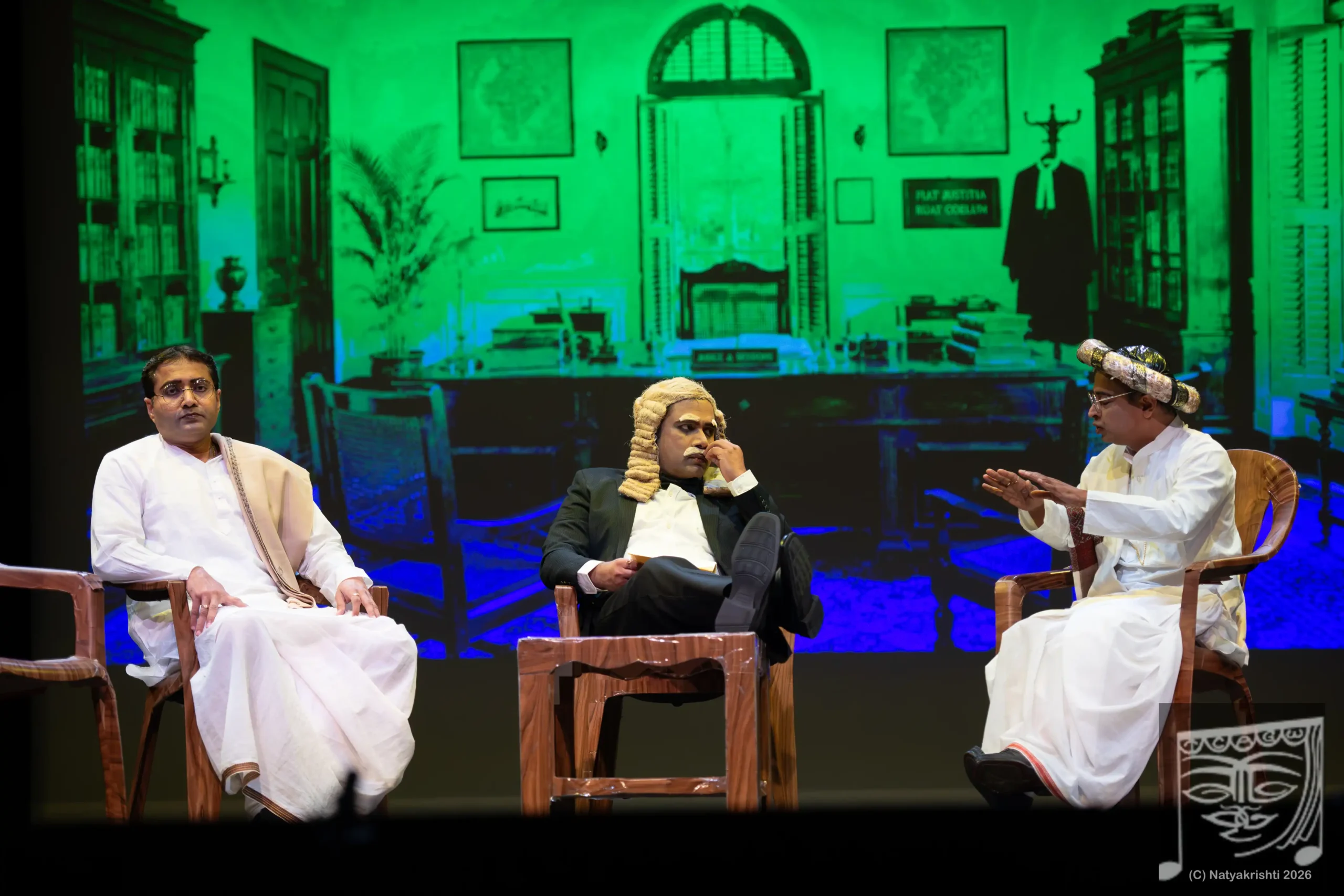
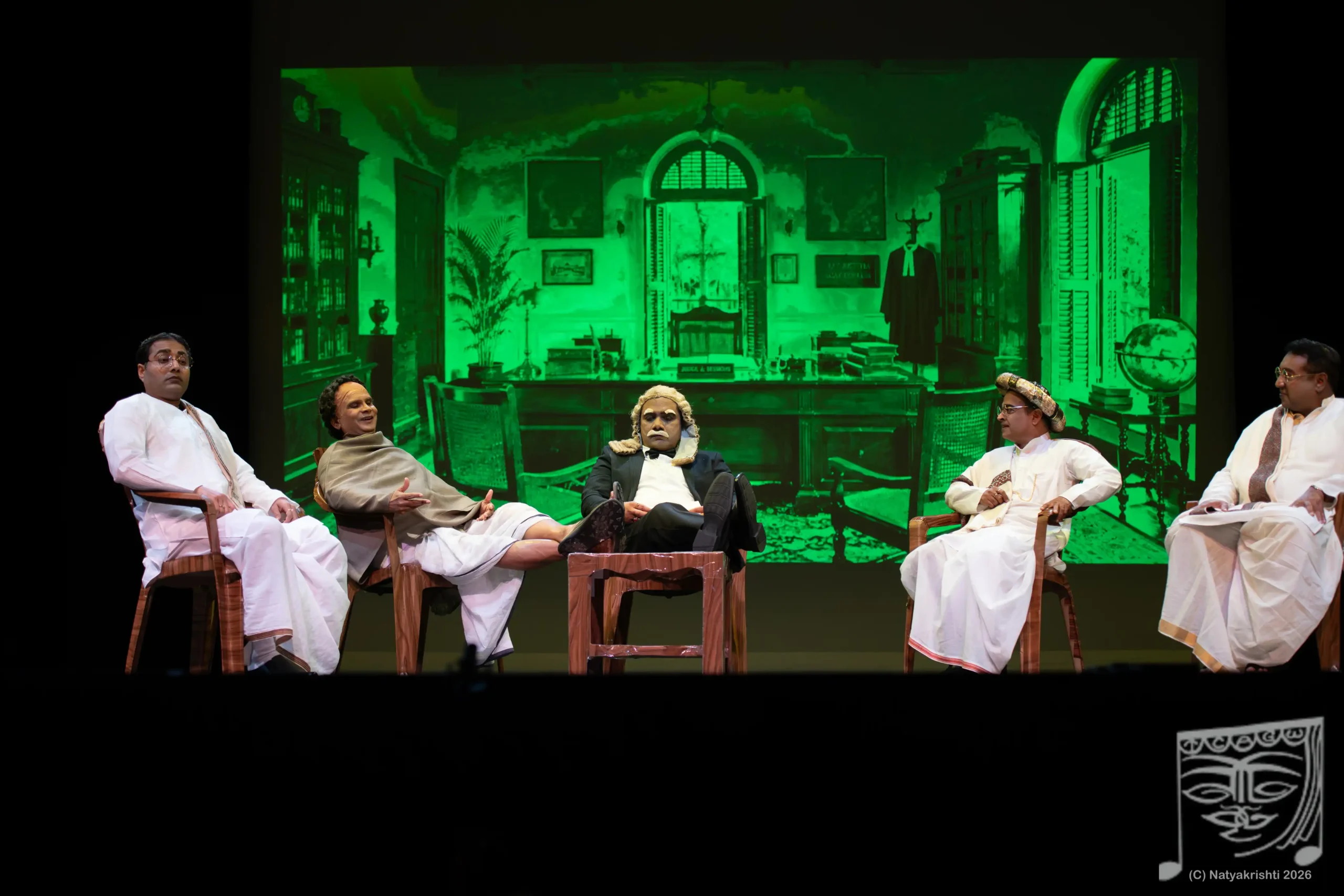
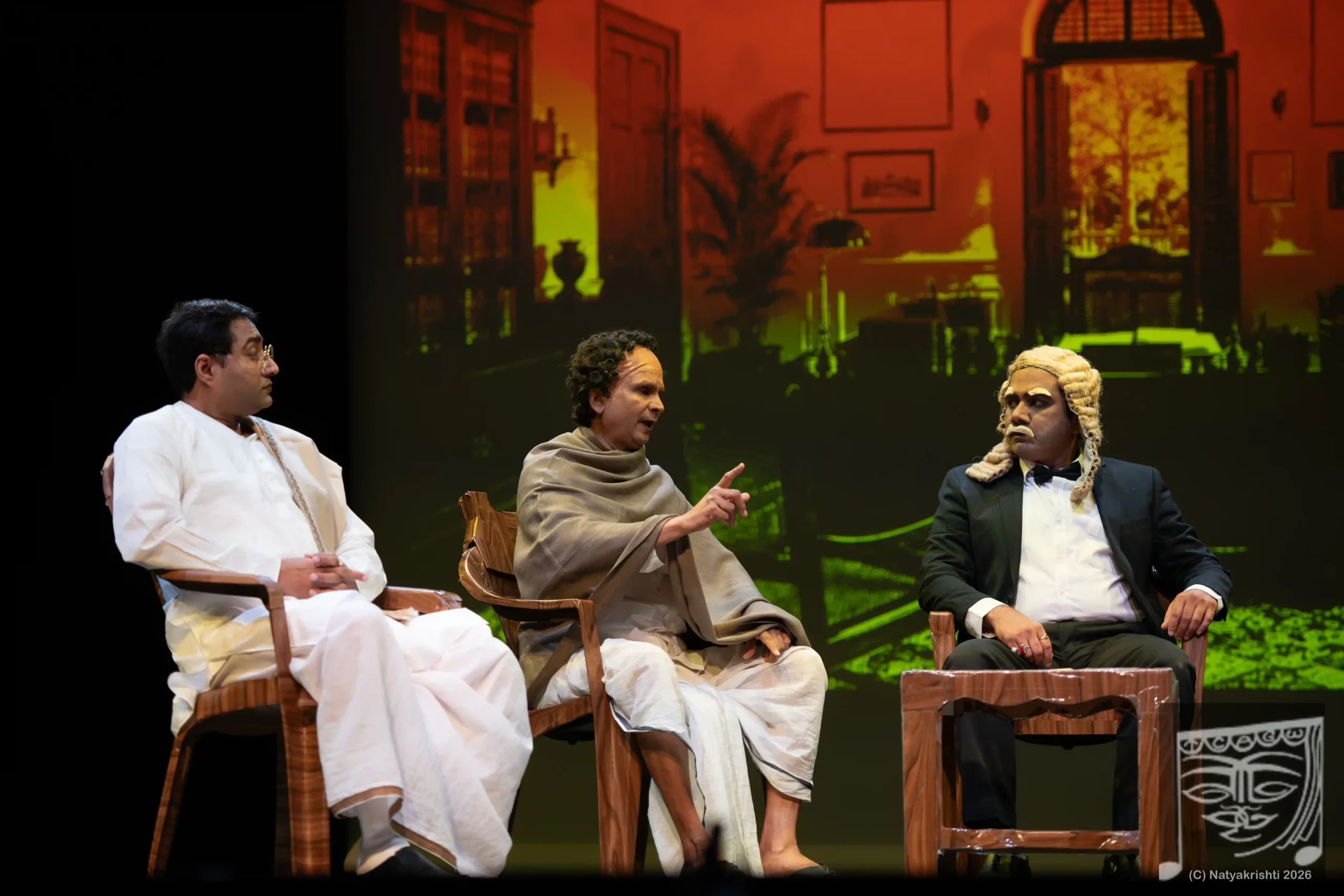
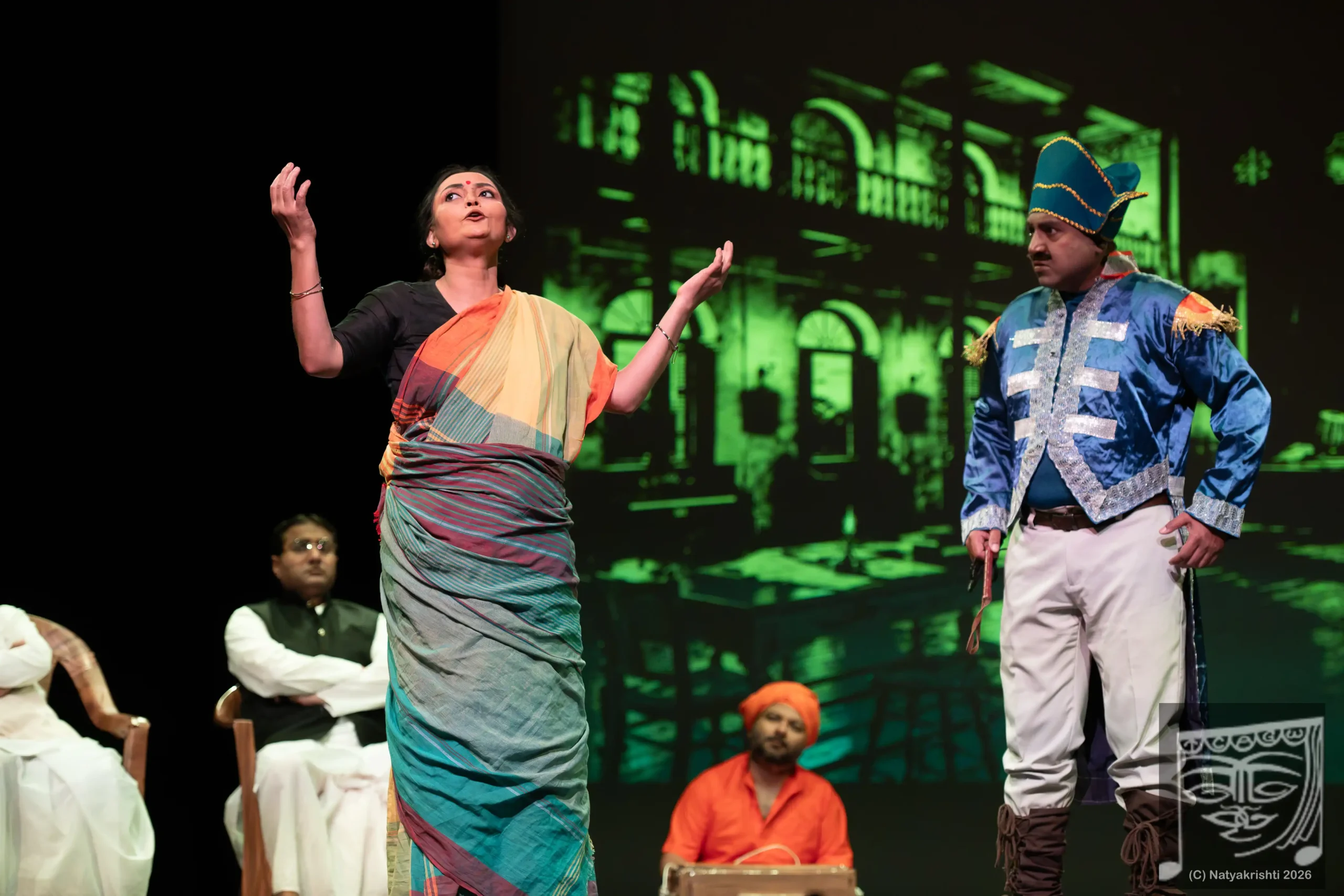
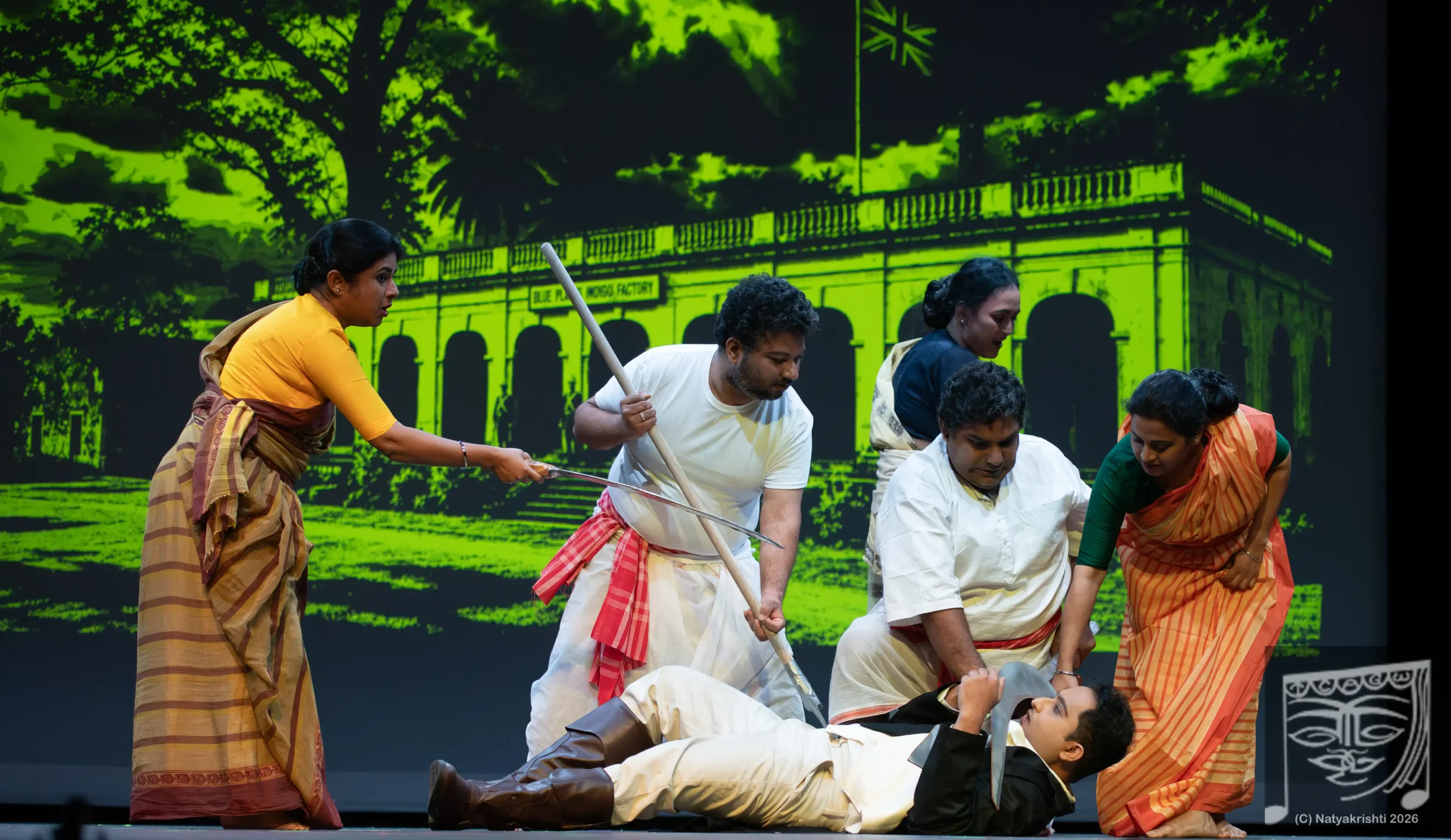
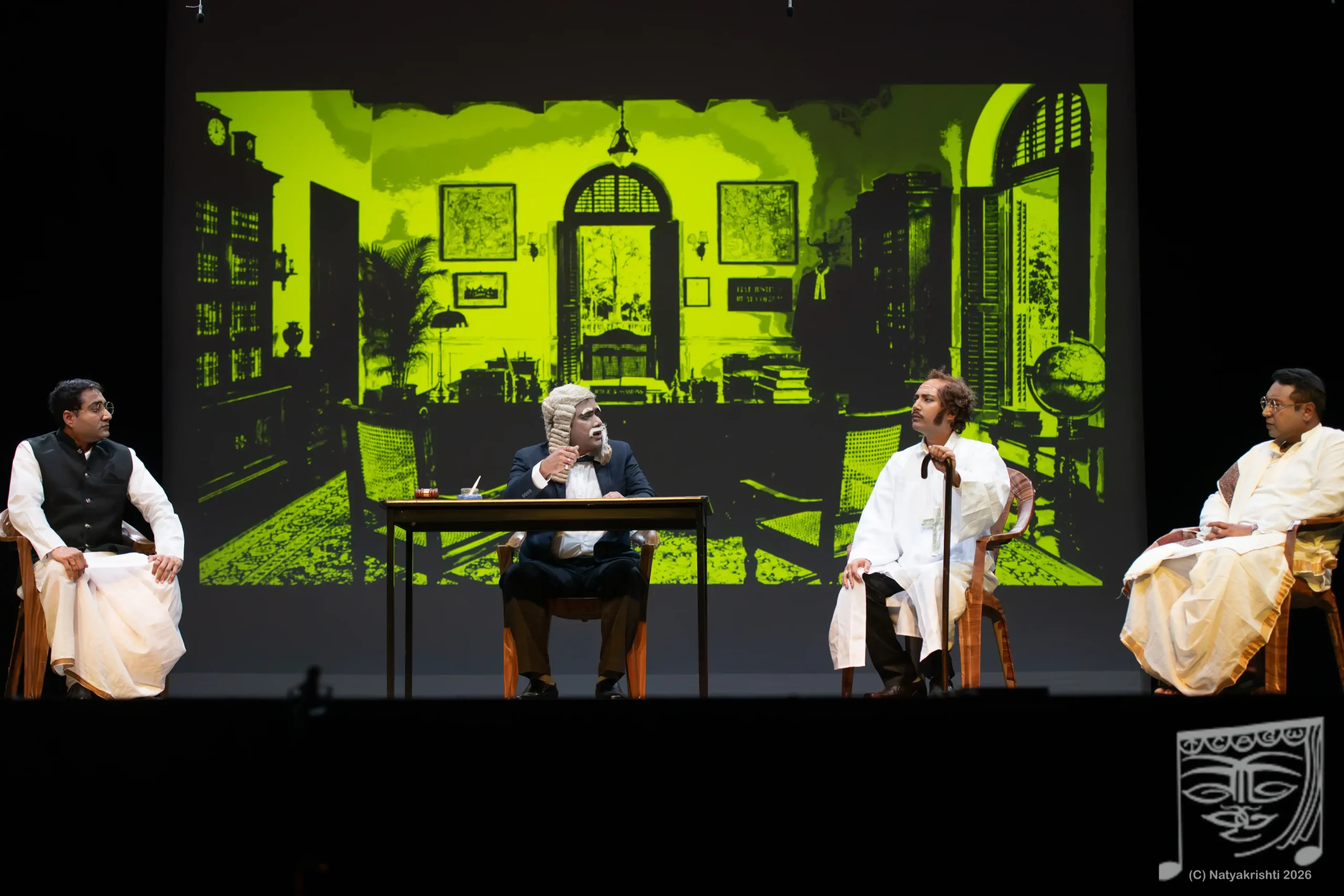
Director Jogobroto Majumder used celluloid backdrops, dramatic lighting, soulful music, and theatrical songs to create a visually engaging and well-knit production for the Maryland–Virginia audience. However, he took considerable liberties with Utpal Dutta’s original script. He focused more on the literary works of Madhusudan like Sarmistha, Buro Shaliker Ghare Roe and Meghnad Badh Kabya, and reduced the scenes and dialogues of Rebecca and Henrietta with Madhusudan.
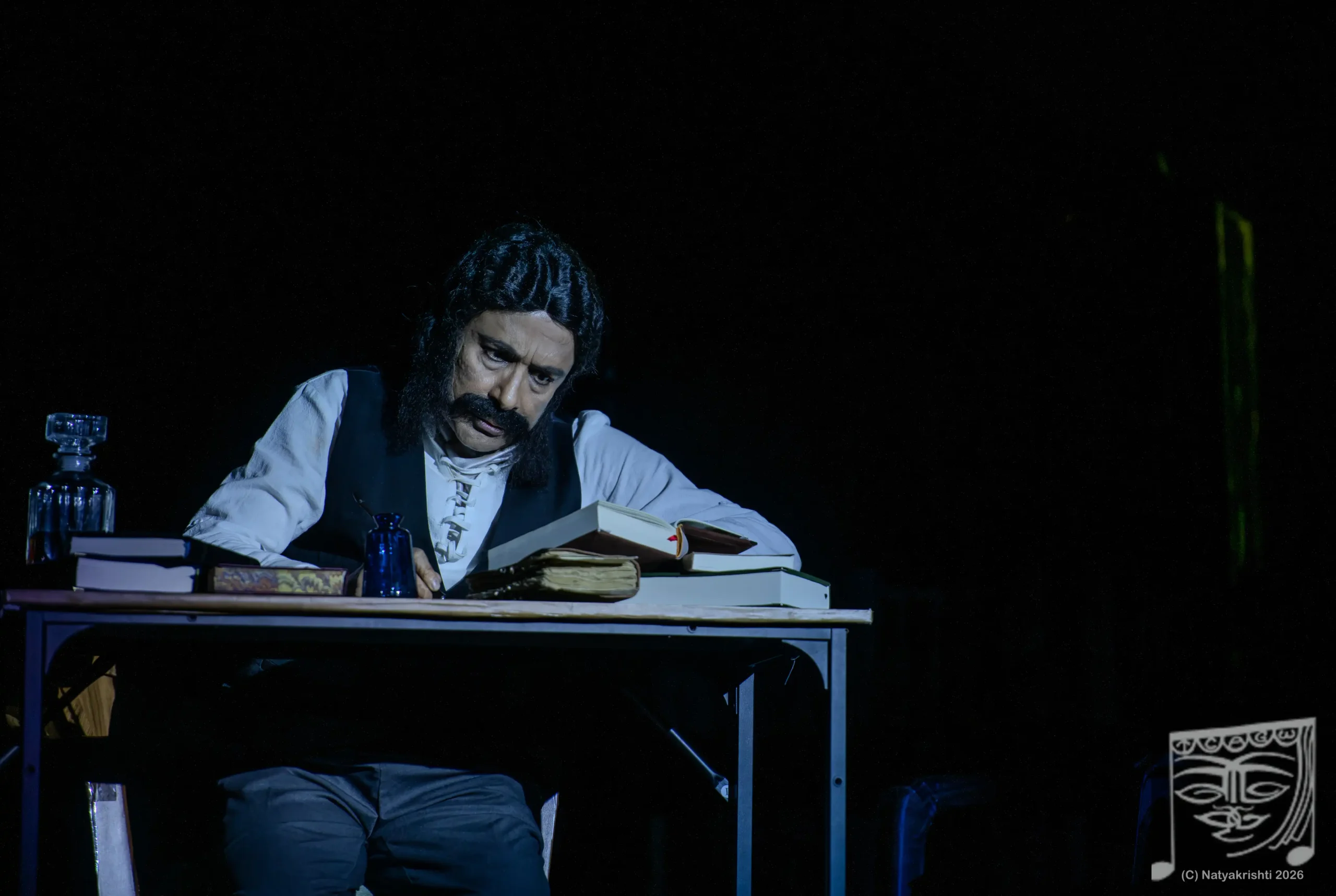
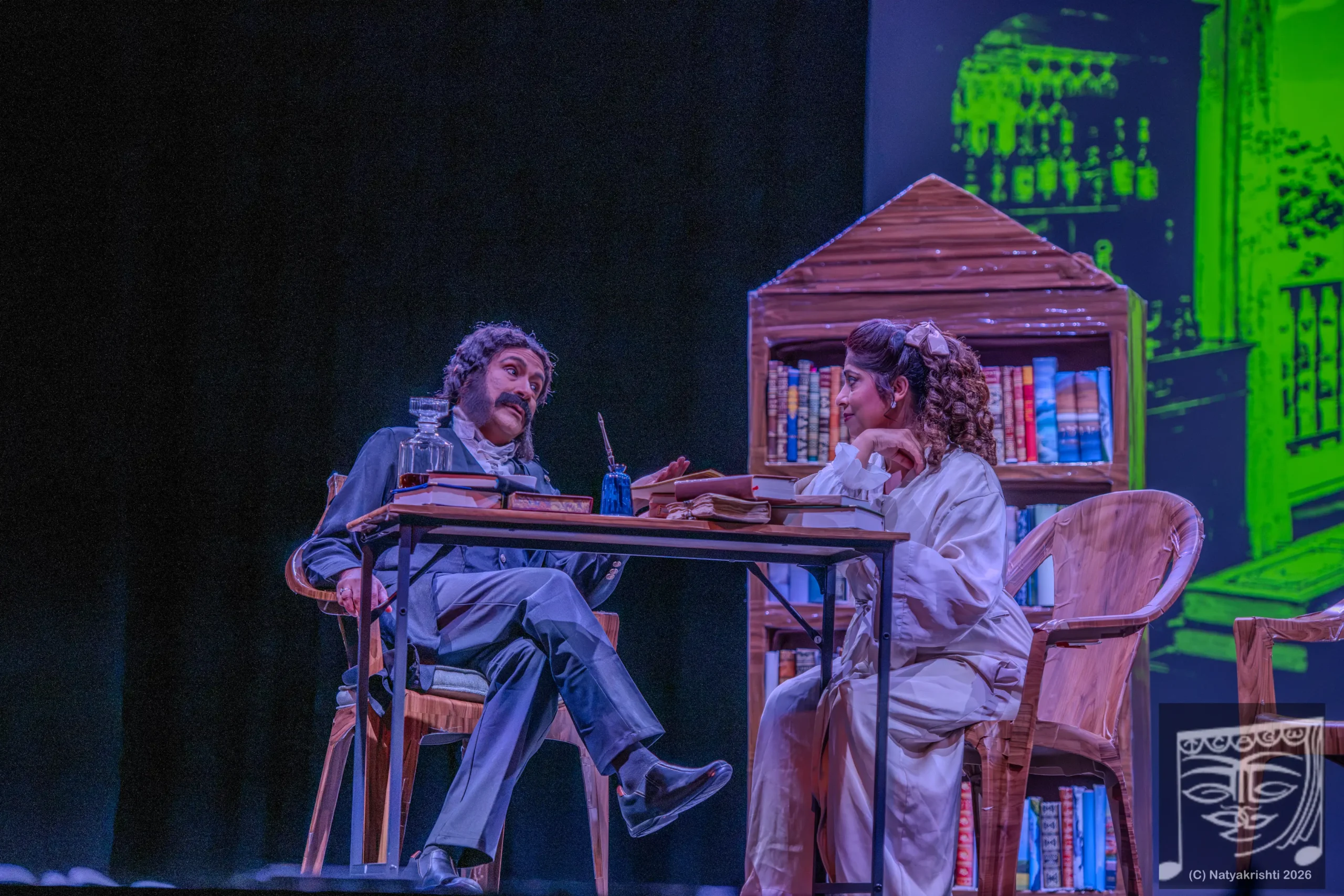
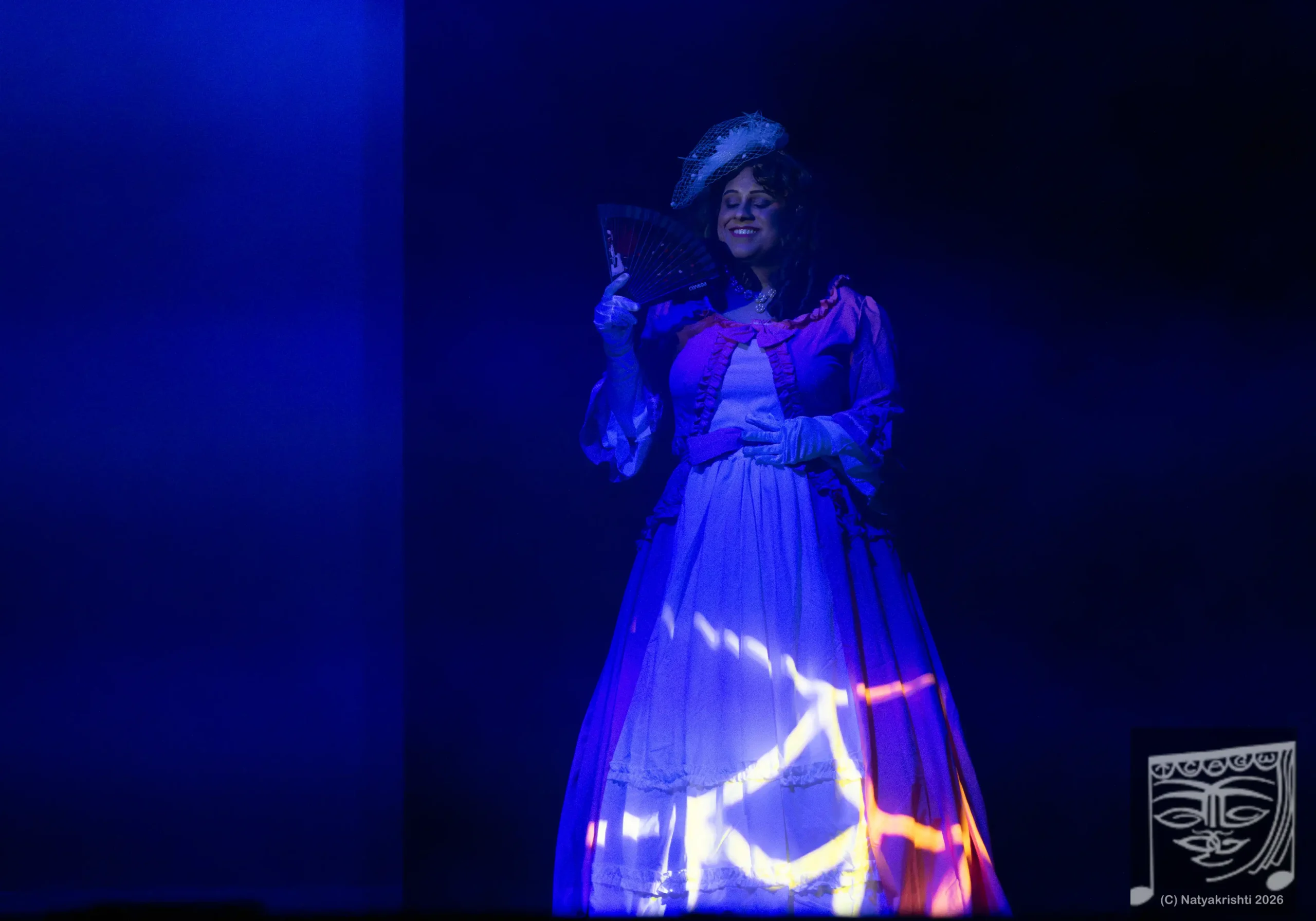
At the beginning, while Madhusudan is shown writing, Majumder introduced a scene from Sharmistha. He also divided the stage into two dramatic spaces through lighting, giving the production a fresh visual dimension. This device was used effectively in several scenes, especially in the introduction of Rebecca. Madhusudan, drunk and writing through the night, appears to hallucinate her presence; the focused spider-web light on Rebecca, combined with smoke, made the scene visually striking. It was a modern and interesting departure from the original treatment.
The first half of the production was tightly structured and built effectively towards a climax. The second half, however, felt prolonged: the narrative became flatter and did not fully regain momentum as it moved toward Madhusudan’s deathbed. Consequently, the play ran for nearly three hours and ten minutes. The numerous deviations from the original text, the inclusion of too many secondary characters, subplots and several unnecessary scenes slowed the central narrative and made the production somewhat overlong.
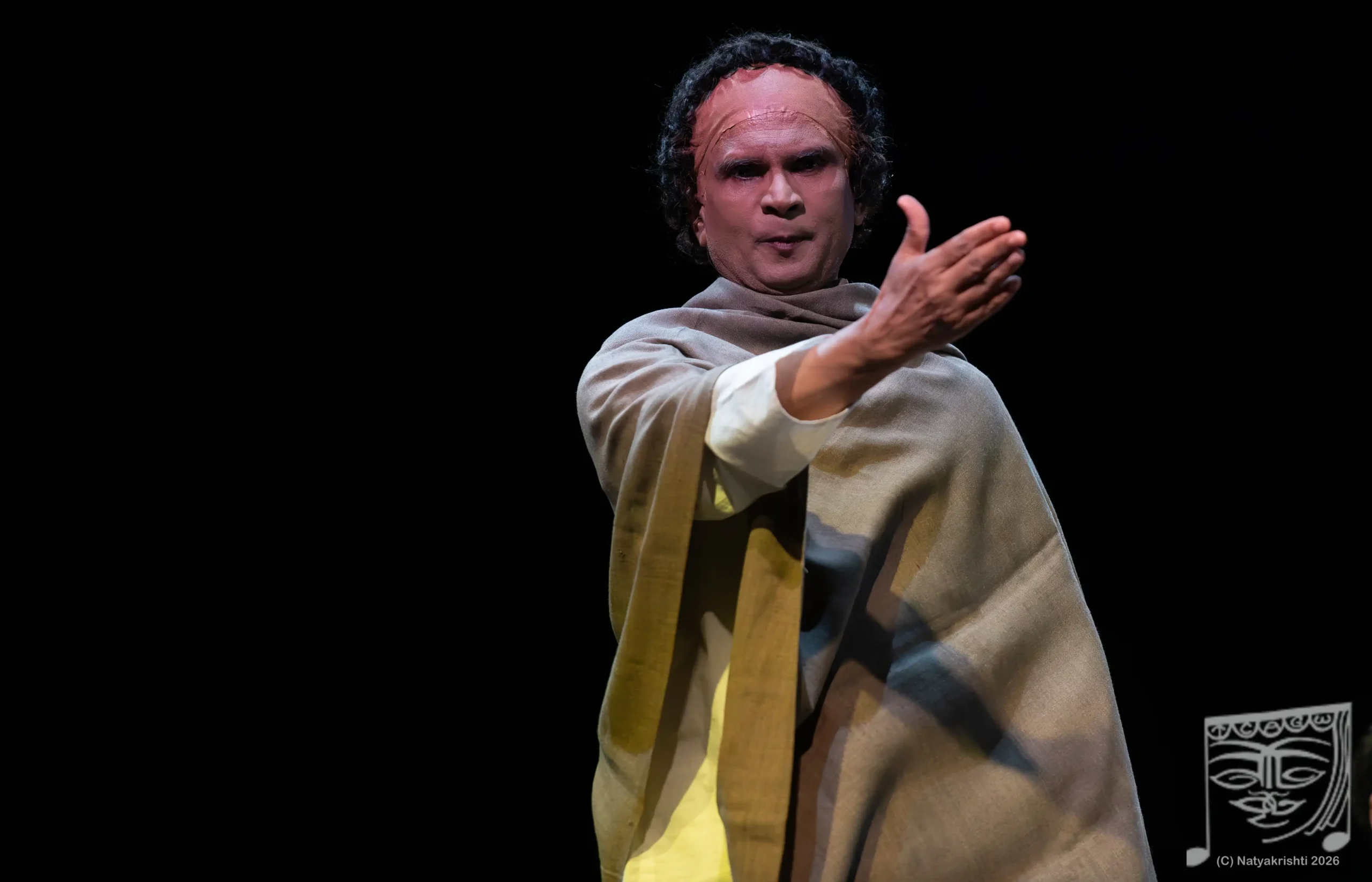
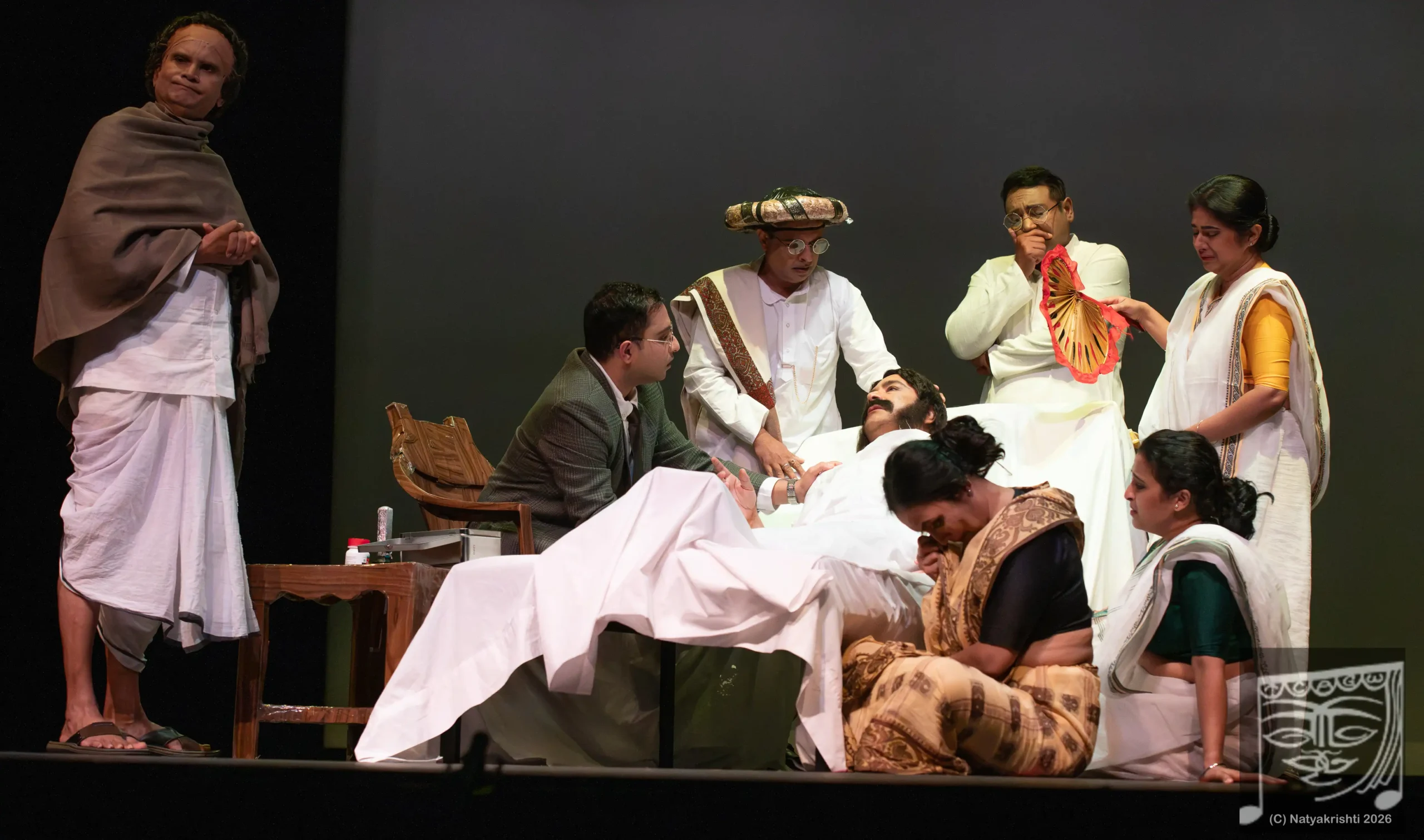
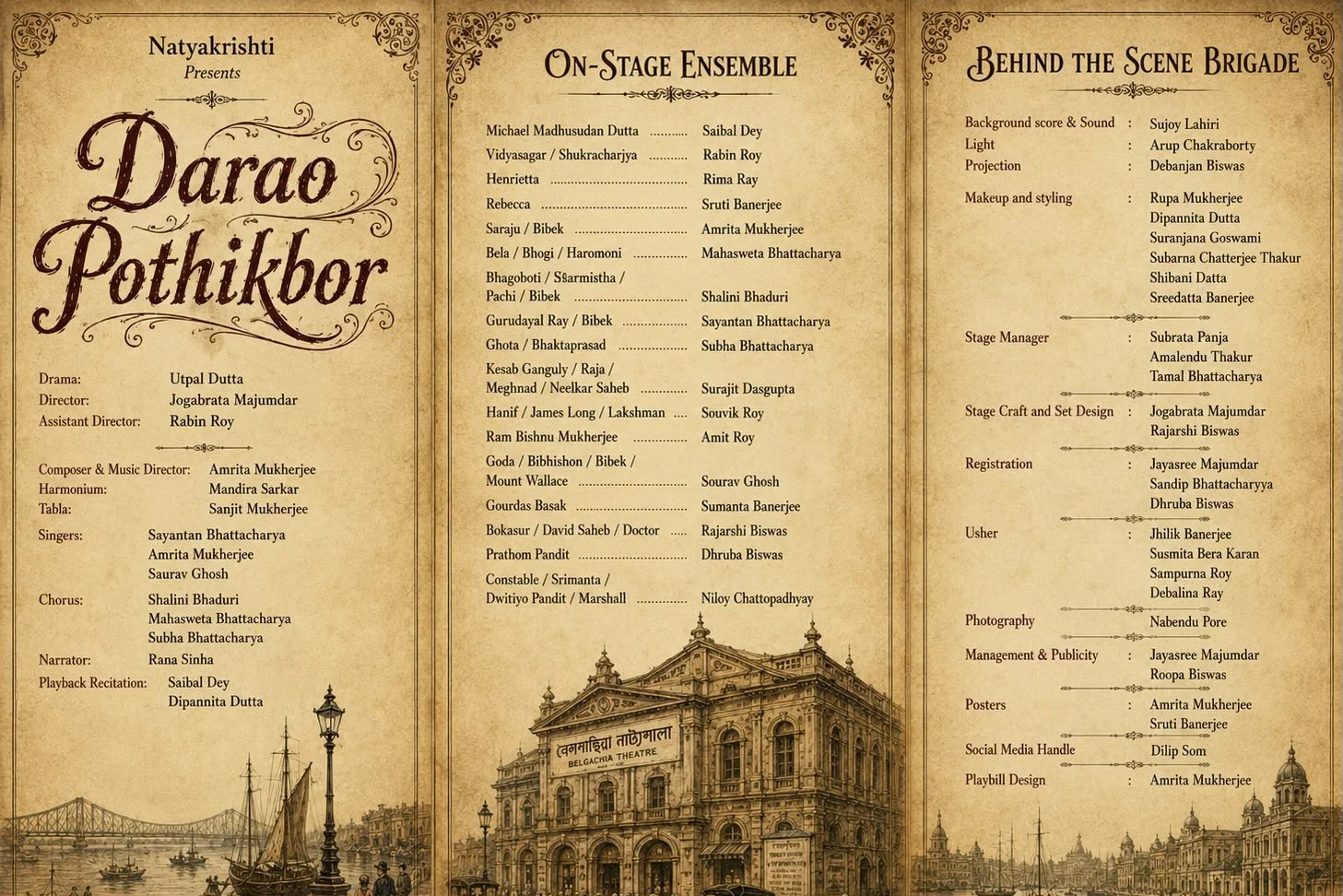
Saibal Dey, a veteran of the Maryland stage, played the central role of Madhusudan. He delivered an excellent portrayal of the genius’s flawed and complex character.
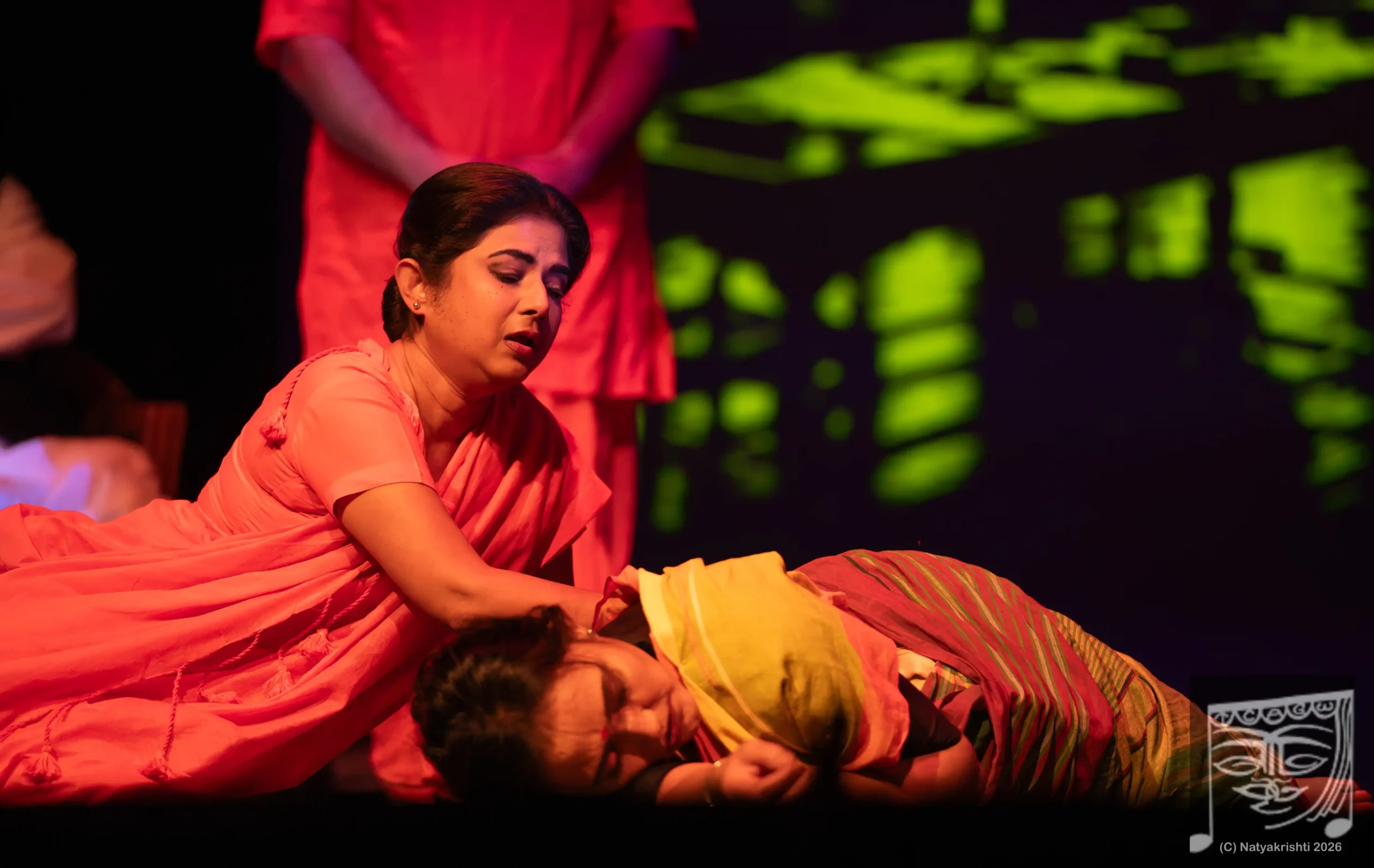
Rebecca’s role was significantly truncated, reducing her to a melodramatic villainess who appears to have nearly ruined Madhusudan’s life. In Utpal Dutta’s original play, however, Rebecca is written with sharpness, emotional complexity, and wounded dignity, in order to capture the devastating human cost of Madhusudan’s erratic, storm-like genius.
Rebecca, played by Sruti Banerjee, still did play her part quite well.
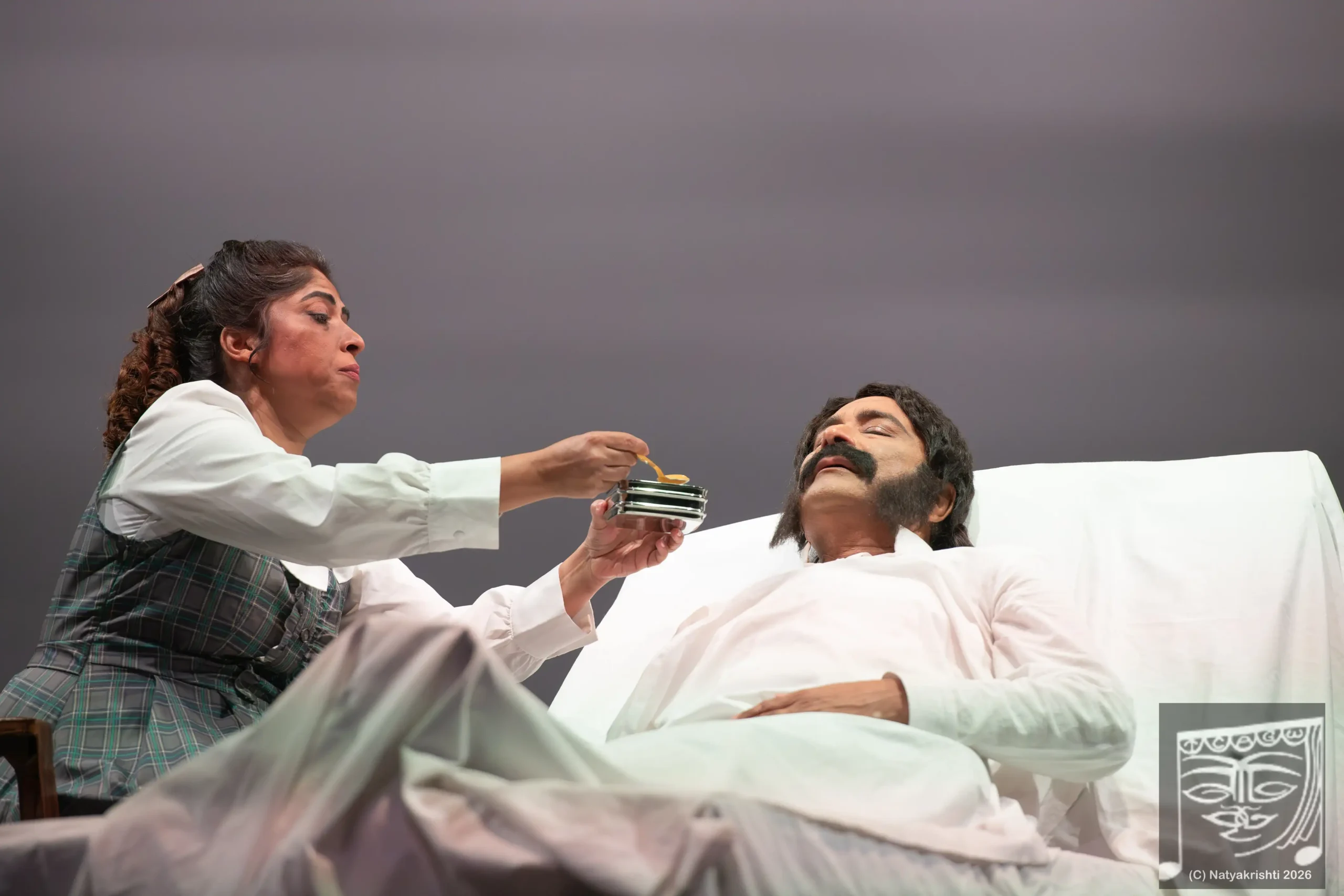
Henrietta’s role was also moderately truncated to a single dimension of a trusted companion. Despite the reduced scope of the role, Rima Ray’s Henrietta effectively conveyed stoic pragmatism and quiet resolve.
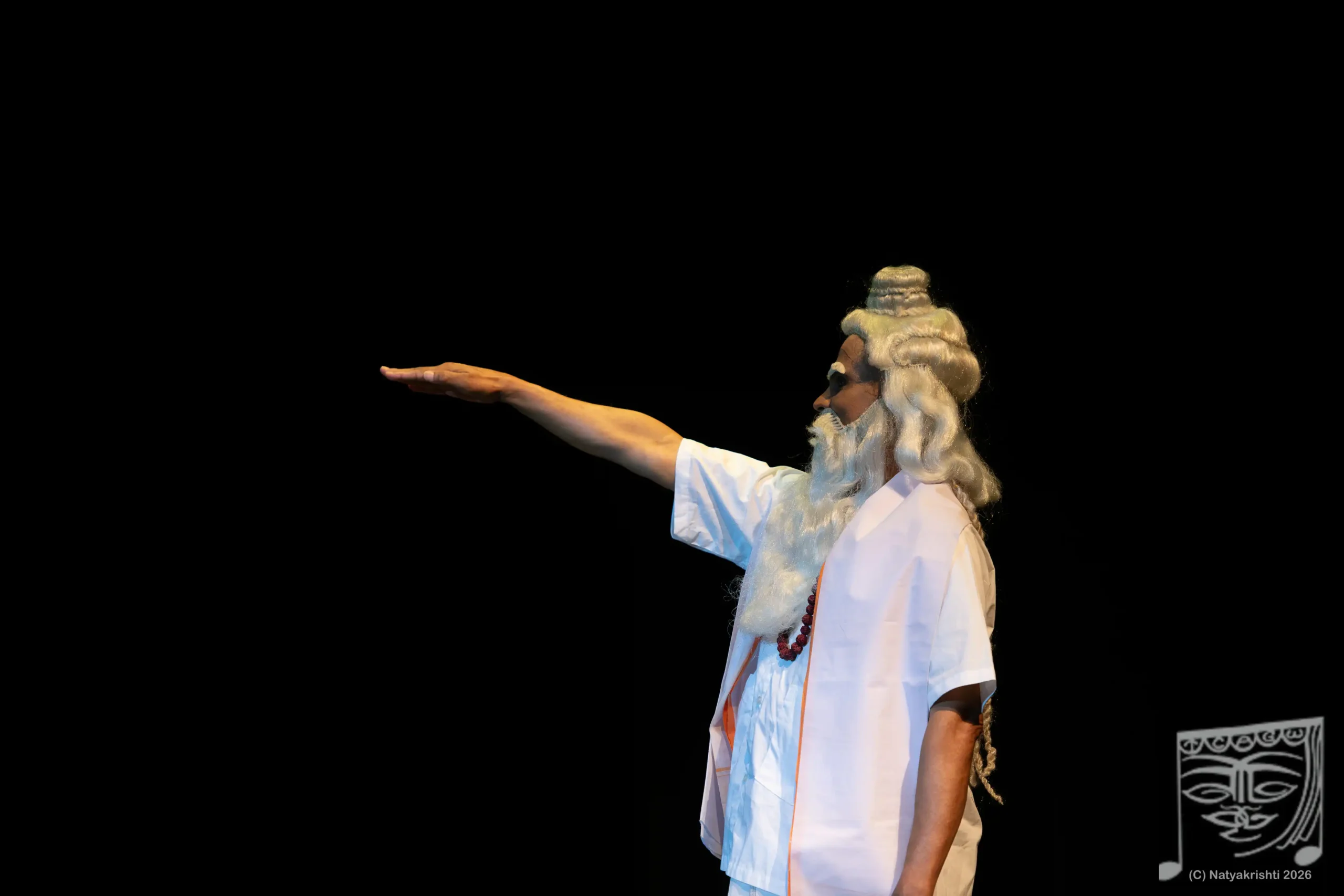
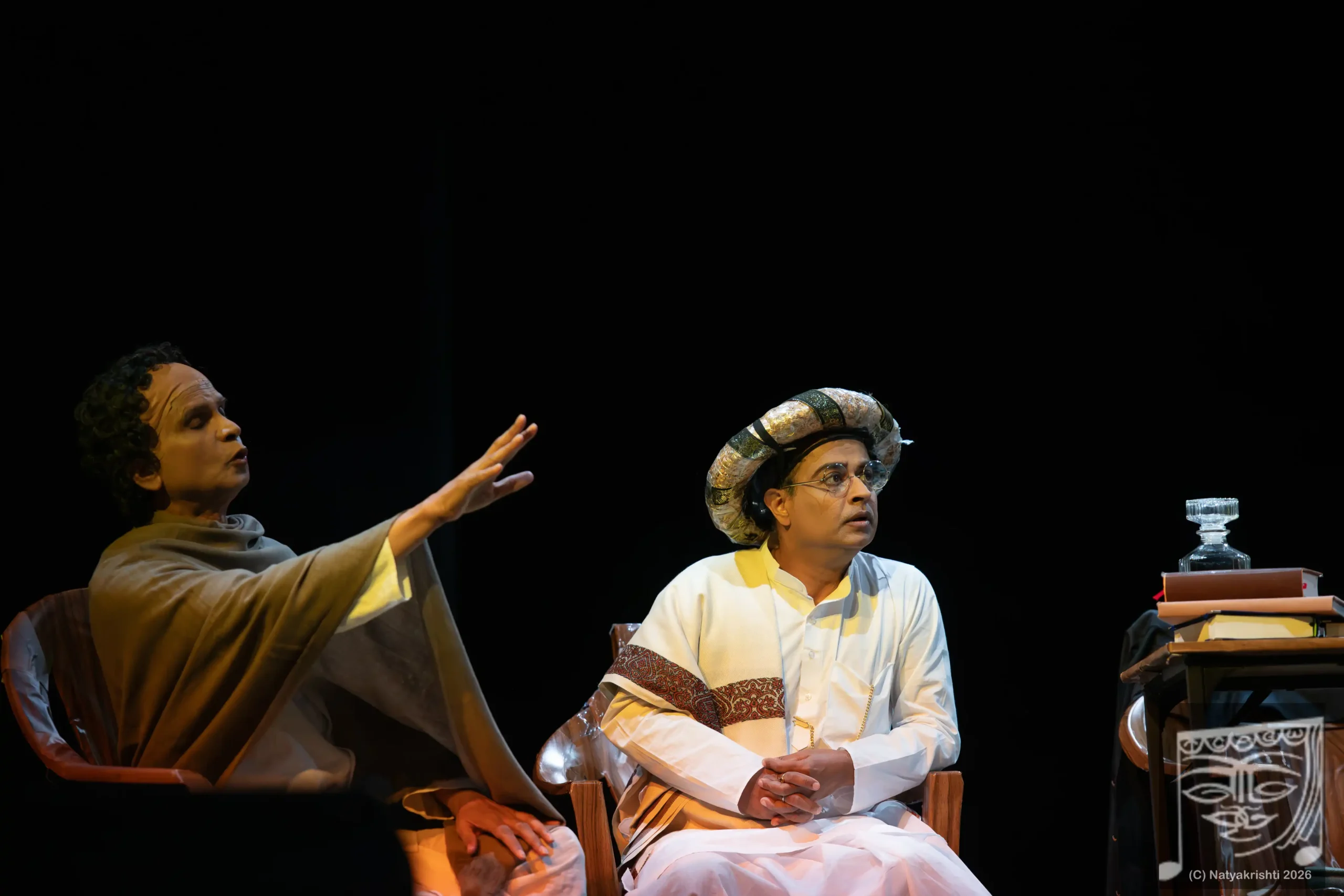
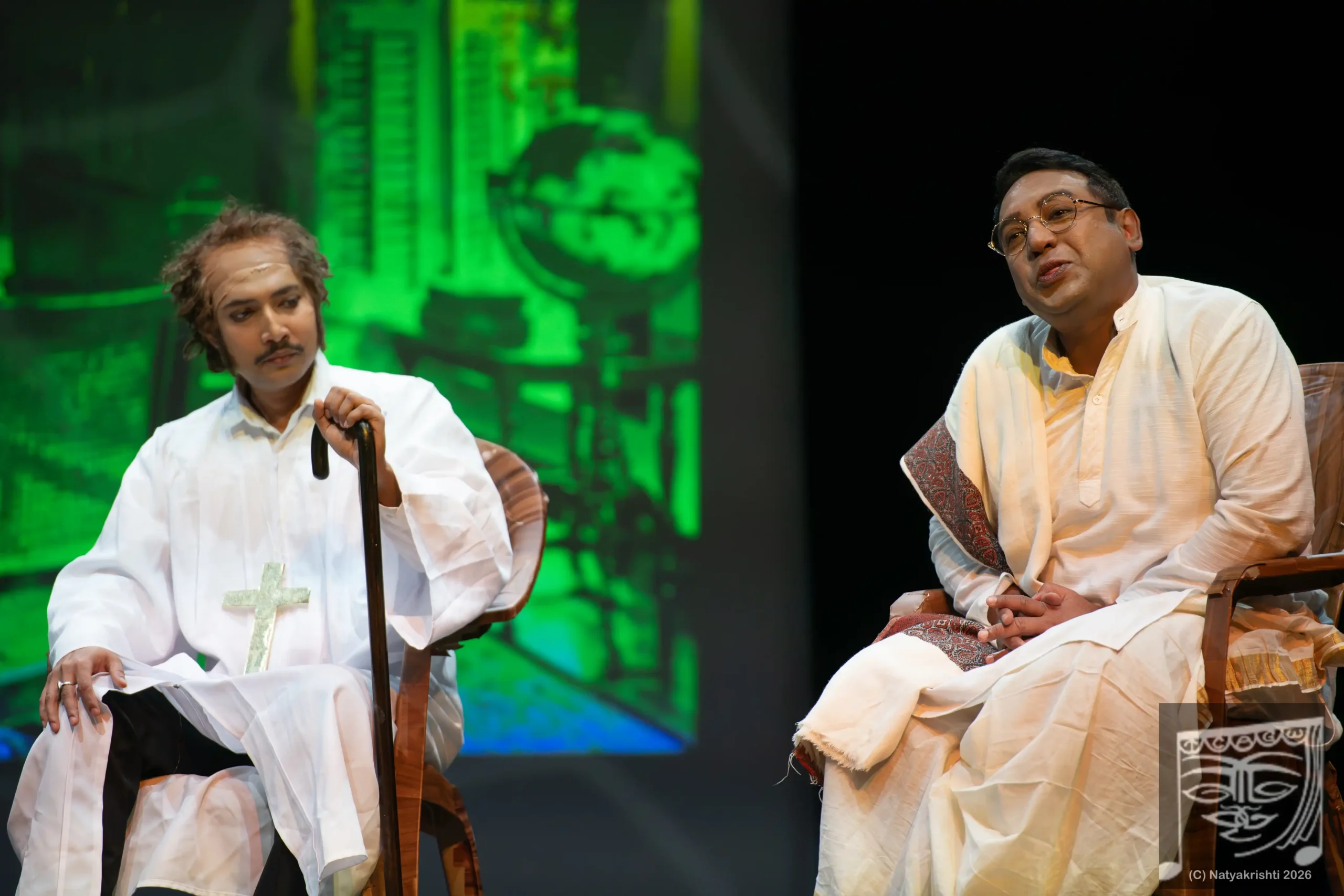
Vidyasagar, played by Rabin Ray, was a stellar performance. His upright posture and expressive non-verbal acting gave the character depth and substance, except his expression in the last scene.
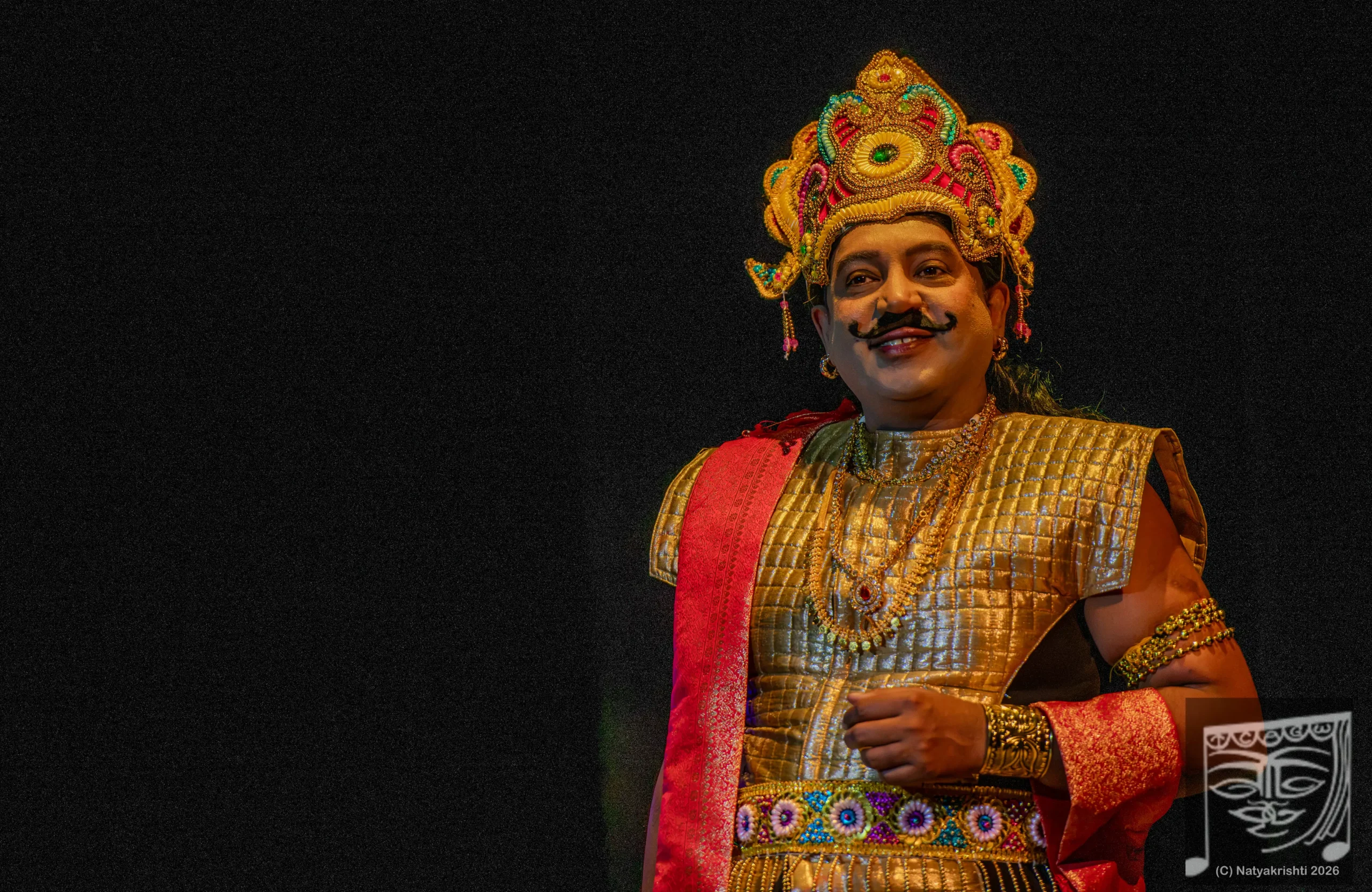
Surojit Dasgupta, particularly as Keshab Ganguly, and Sourav Ghosh, especially as Goda and as Judge, had good stage presence. Sourav sang well as Vivek.
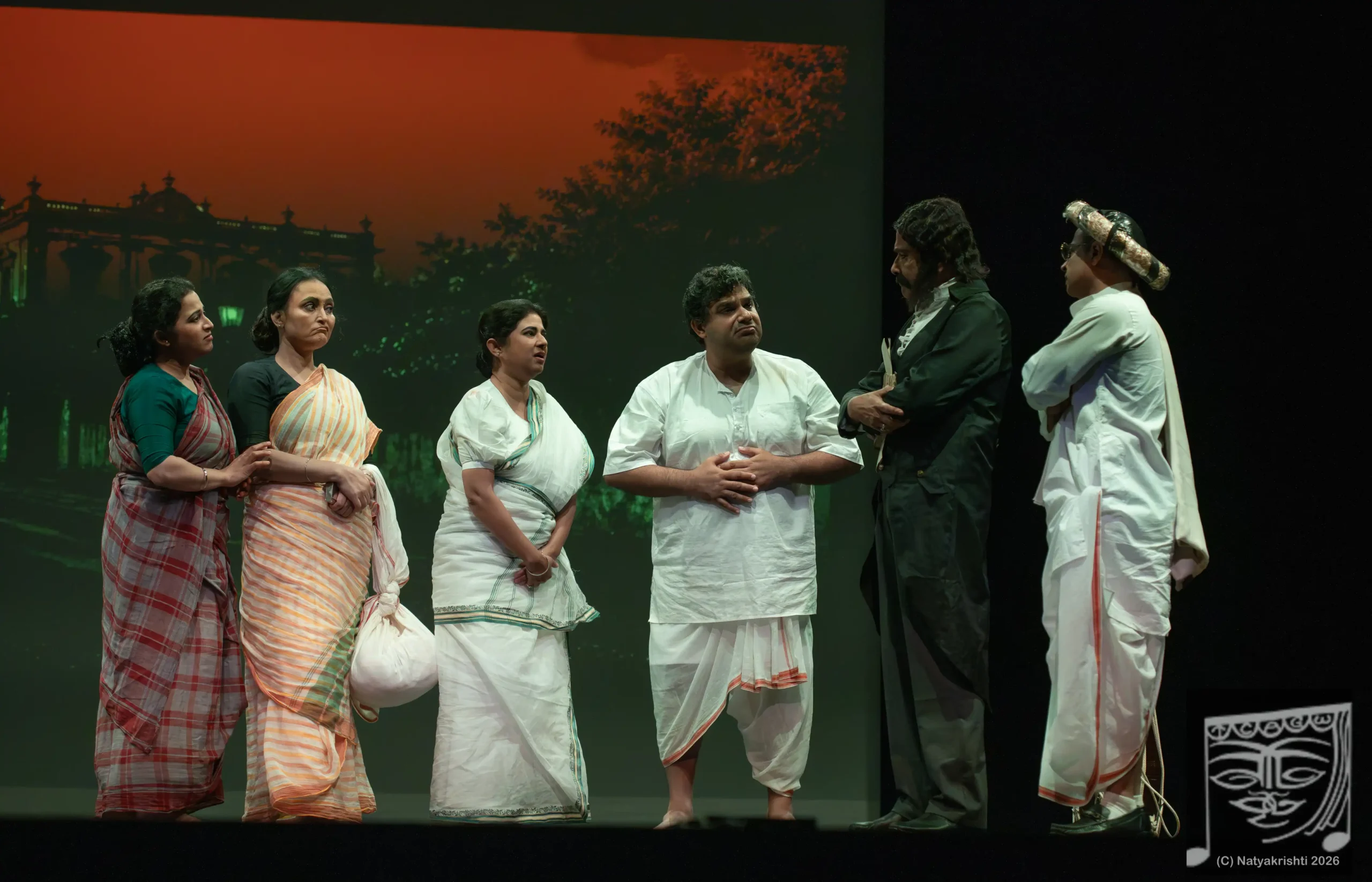
Others who left their presence felt on the stage are Shubha Bhattacharya as Bhakta Prasad, Amit Ray as Ram Bishnu, Sumanta Banerjee as Gour Das Basak and Souvik Roy as James Long.
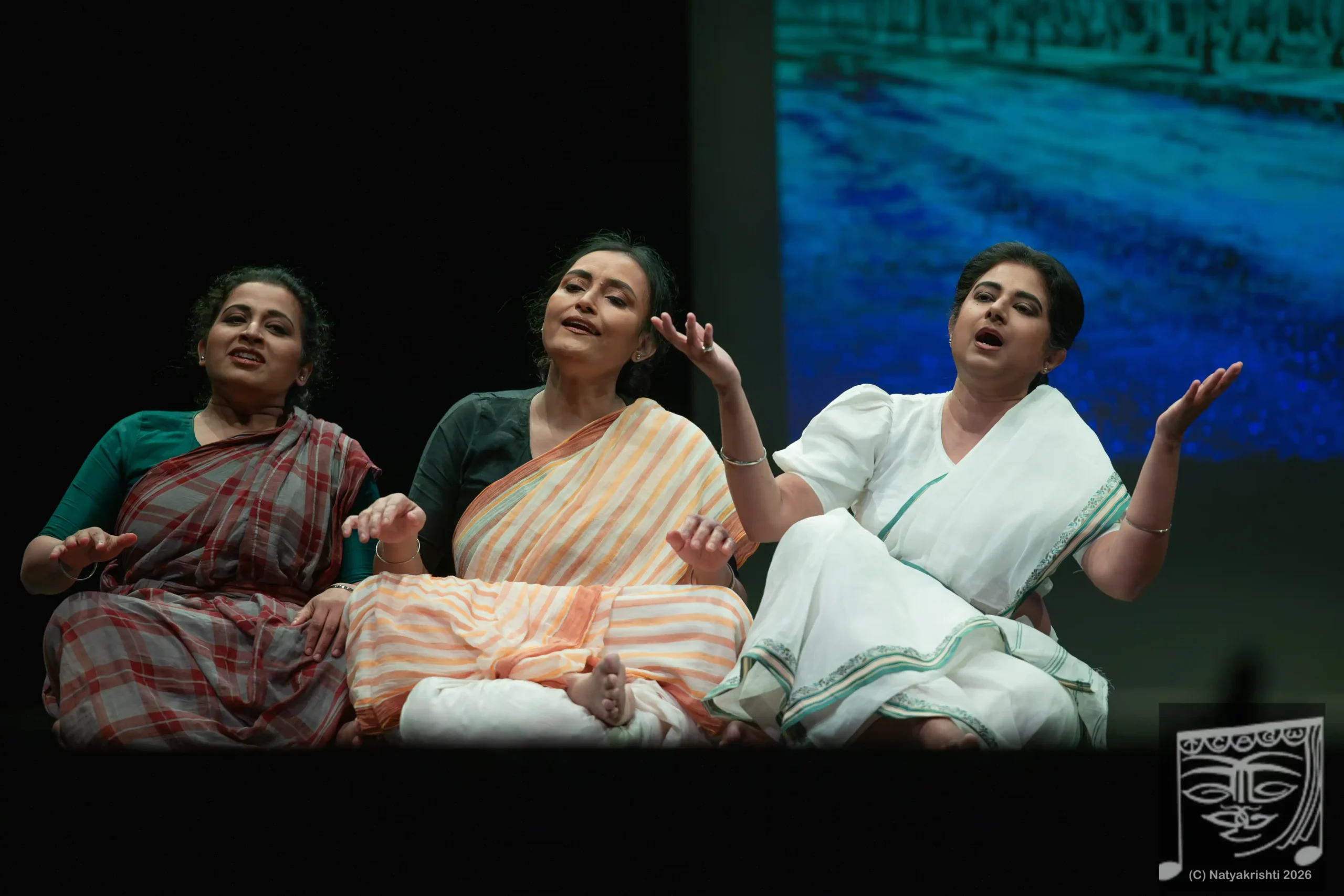
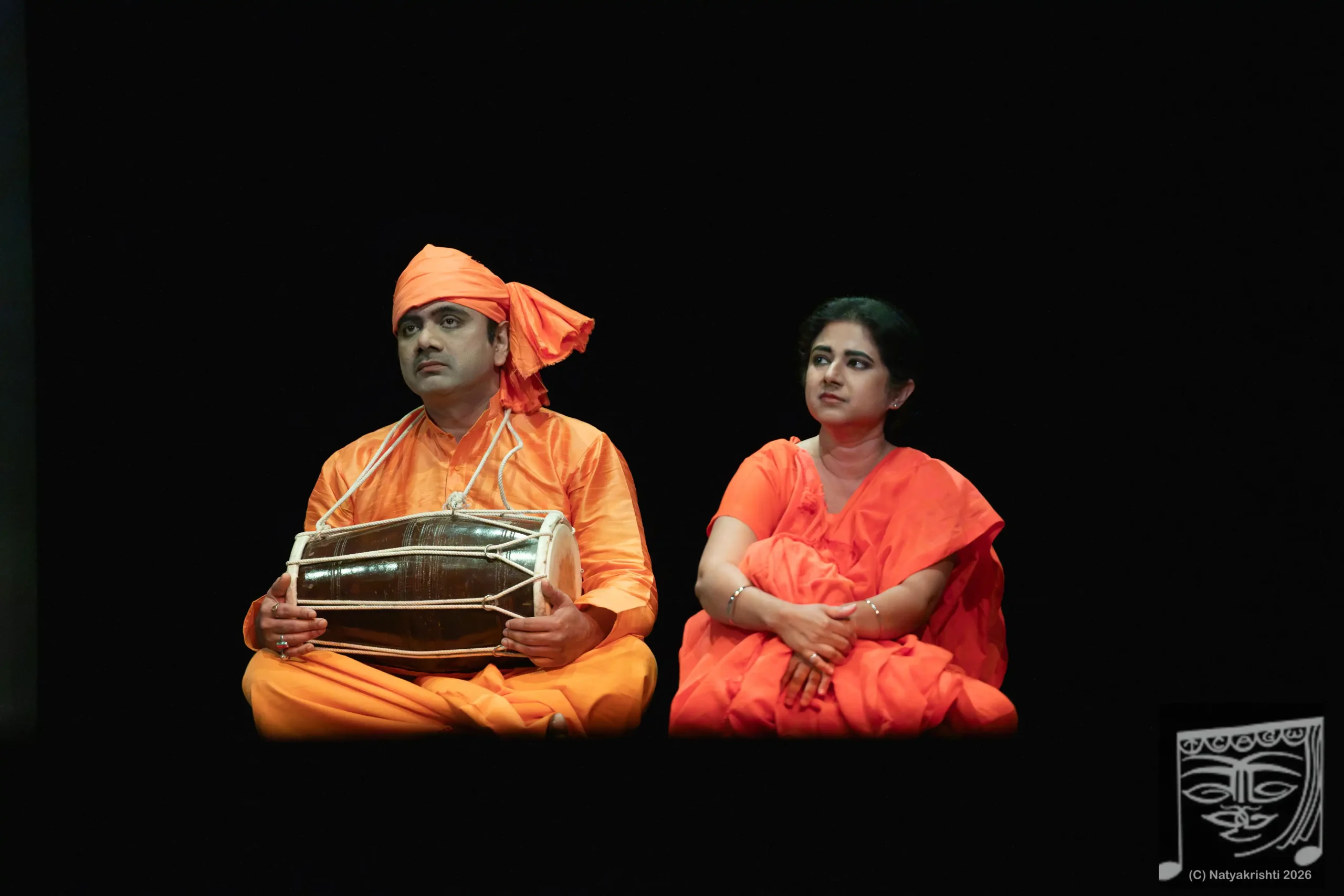
Mr. Majumder made extensive use of kheur songs throughout the production. Amrita Mukherjee sang them well theatrically and composed soulful music that enriched the emotional impact. She also delivered effective dramatic performances as Saraju.
Mahasweta Bhattacharya skillfully added the rustic touch of rural Bengal to all her characters. Shalini Bhaduri also did a good act with limited opportunities.
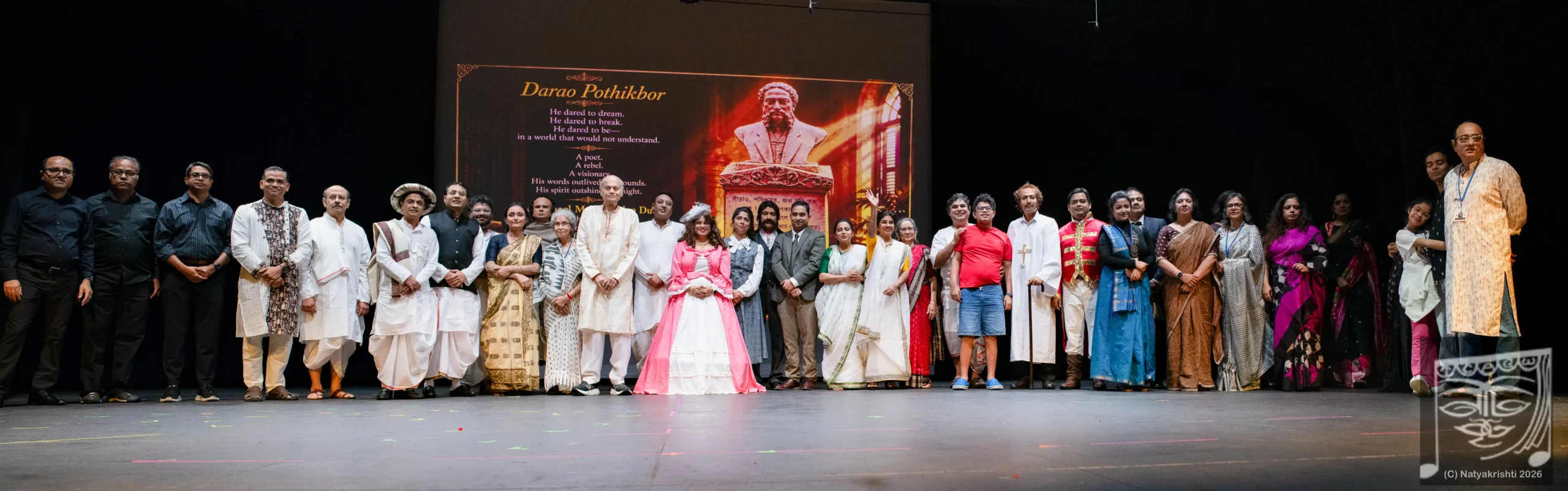
All other players played their part well, which elevated the overall performance. Here lies the success of the Director.
Madhusudan’s financial recklessness, the reasons behind it, and his philosophy of money—elements that Utpal Dutta captured so skillfully through dialogues and scenes—were also largely absent. As a result, the audience did not get the opportunity to appreciate the dichotomy of his character.
The entire production design and execution was excellent, especially lights, except for some glitches with sound and a few jumbled-up speeches by actors, which they need to take care of.
Rather than a strict staging of Utpal Dutt’s play, it may be better understood as a production inspired by it—one in which the director brought his own narration to the material with some success for the audience watching for the first time.
My heartfelt thanks to the entire Natya Krishti team for their sincere, ambitious, and commendable effort.
Saugata Banerjee
Read LessMore Reviews